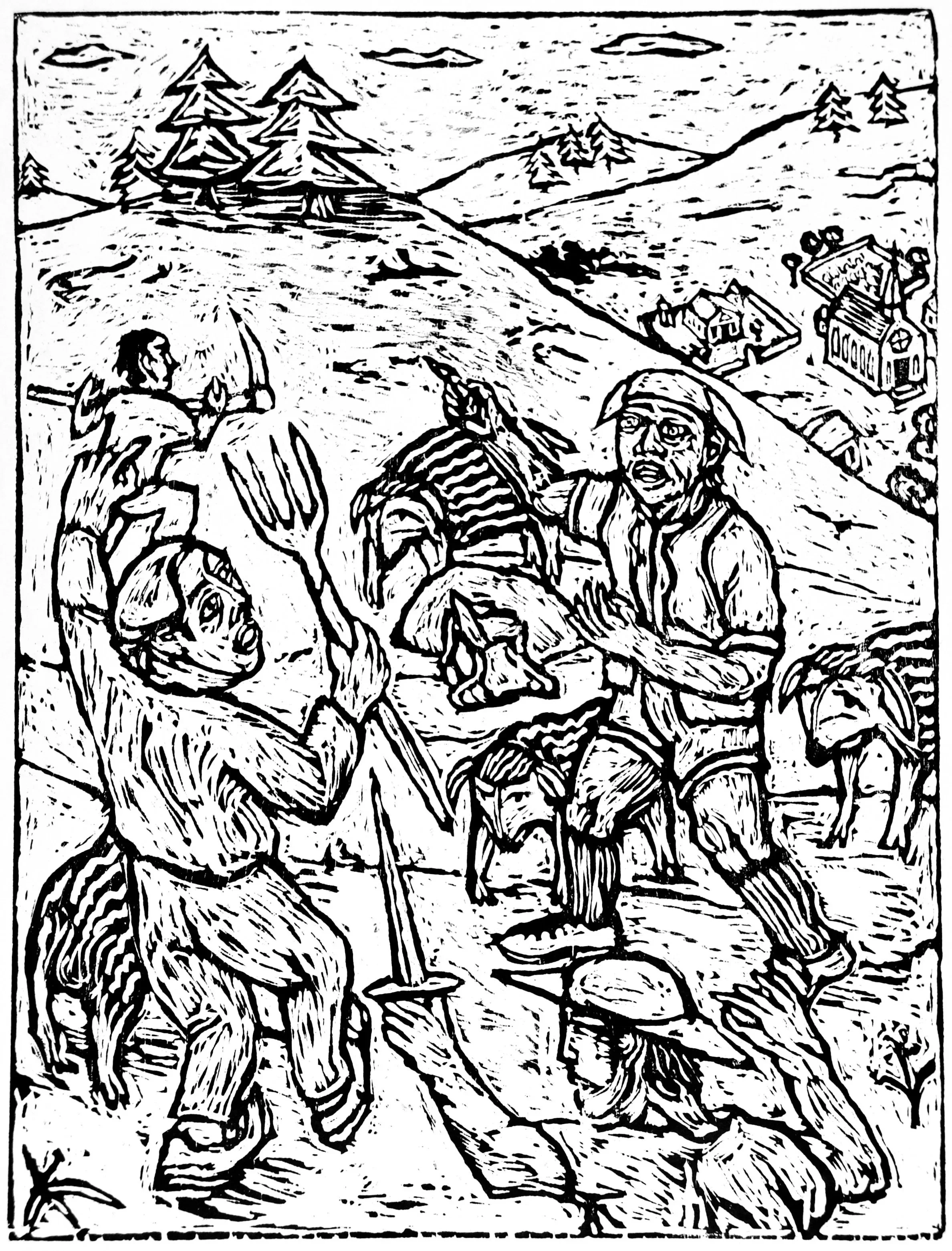
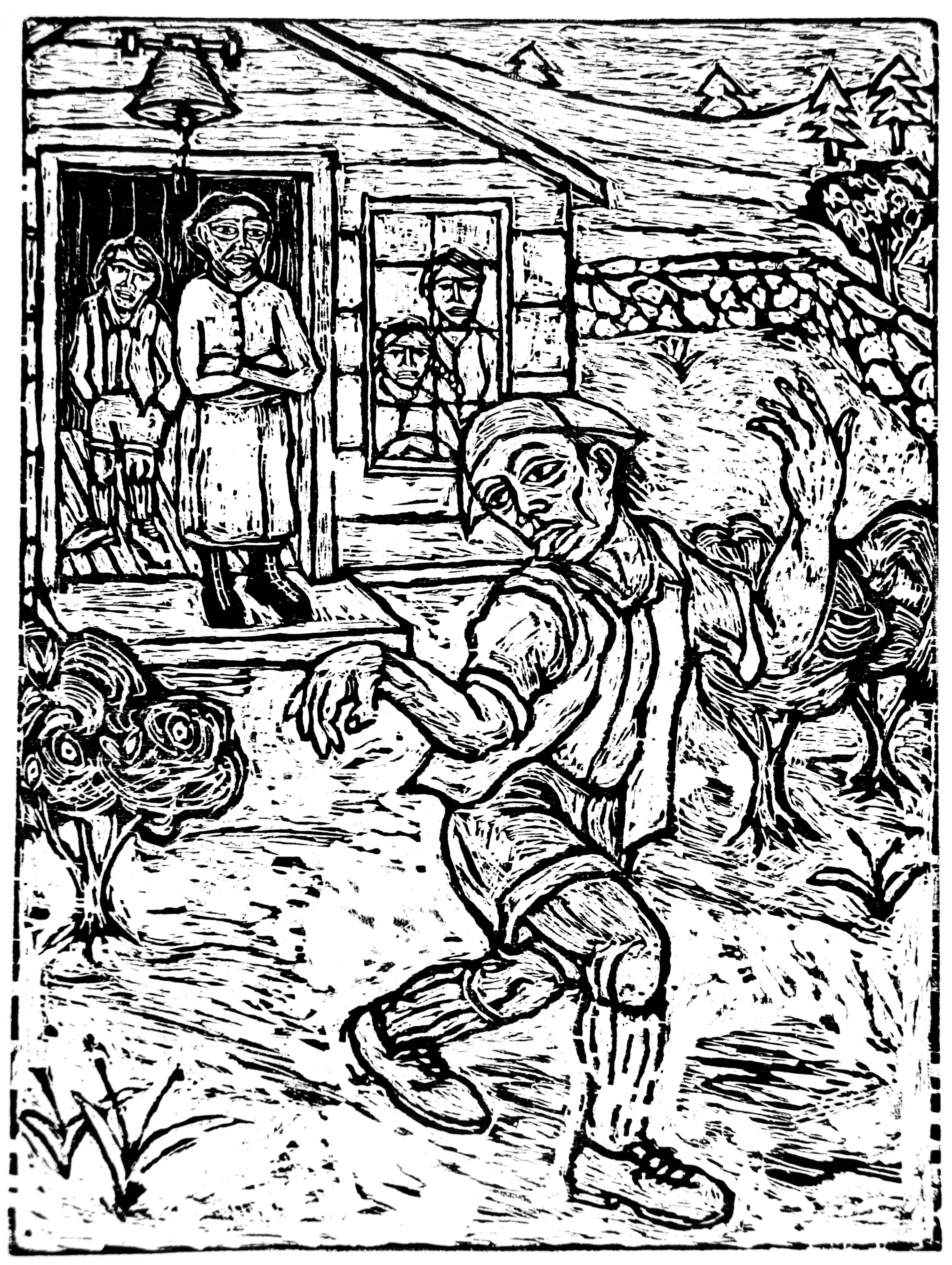
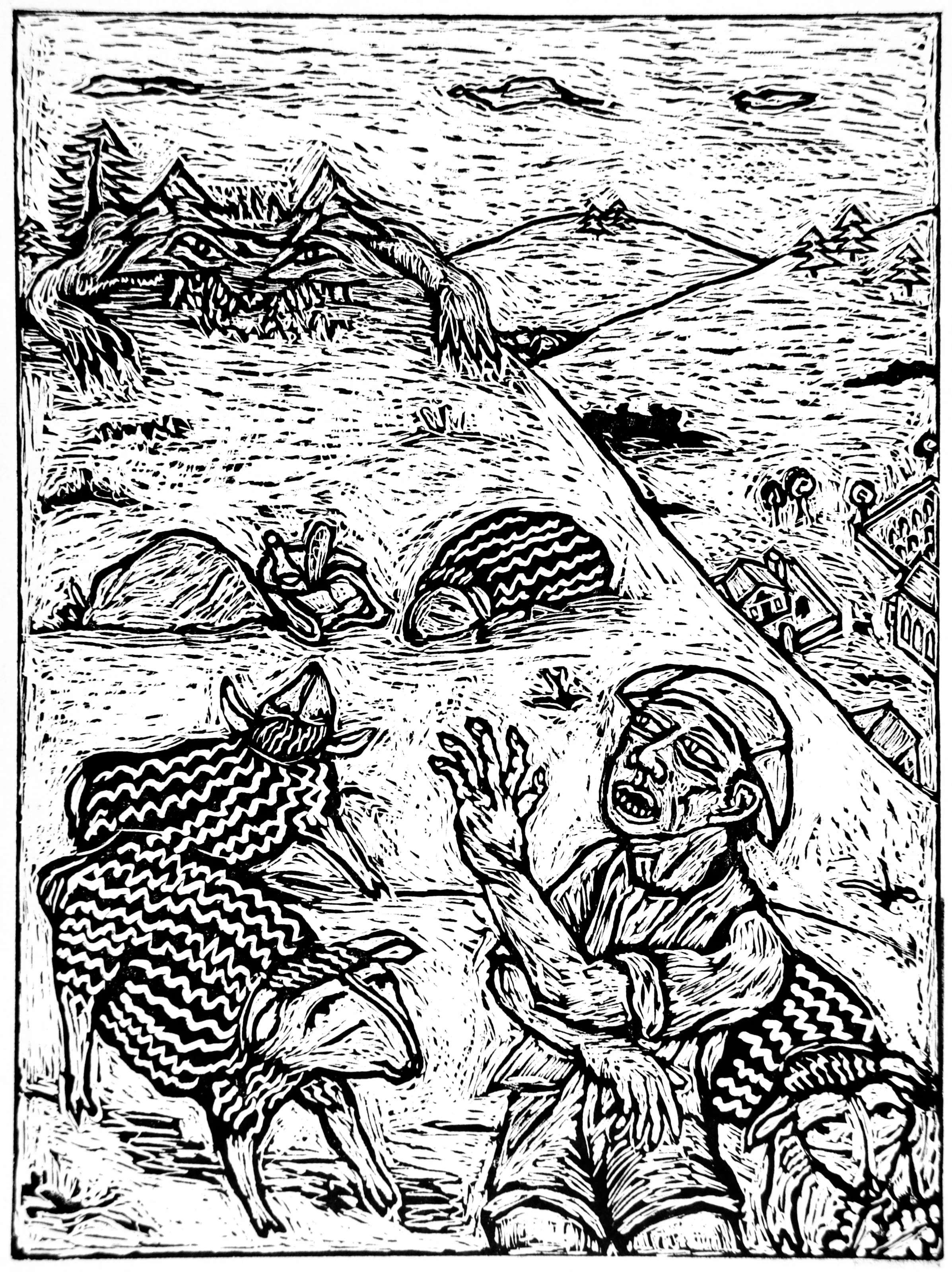
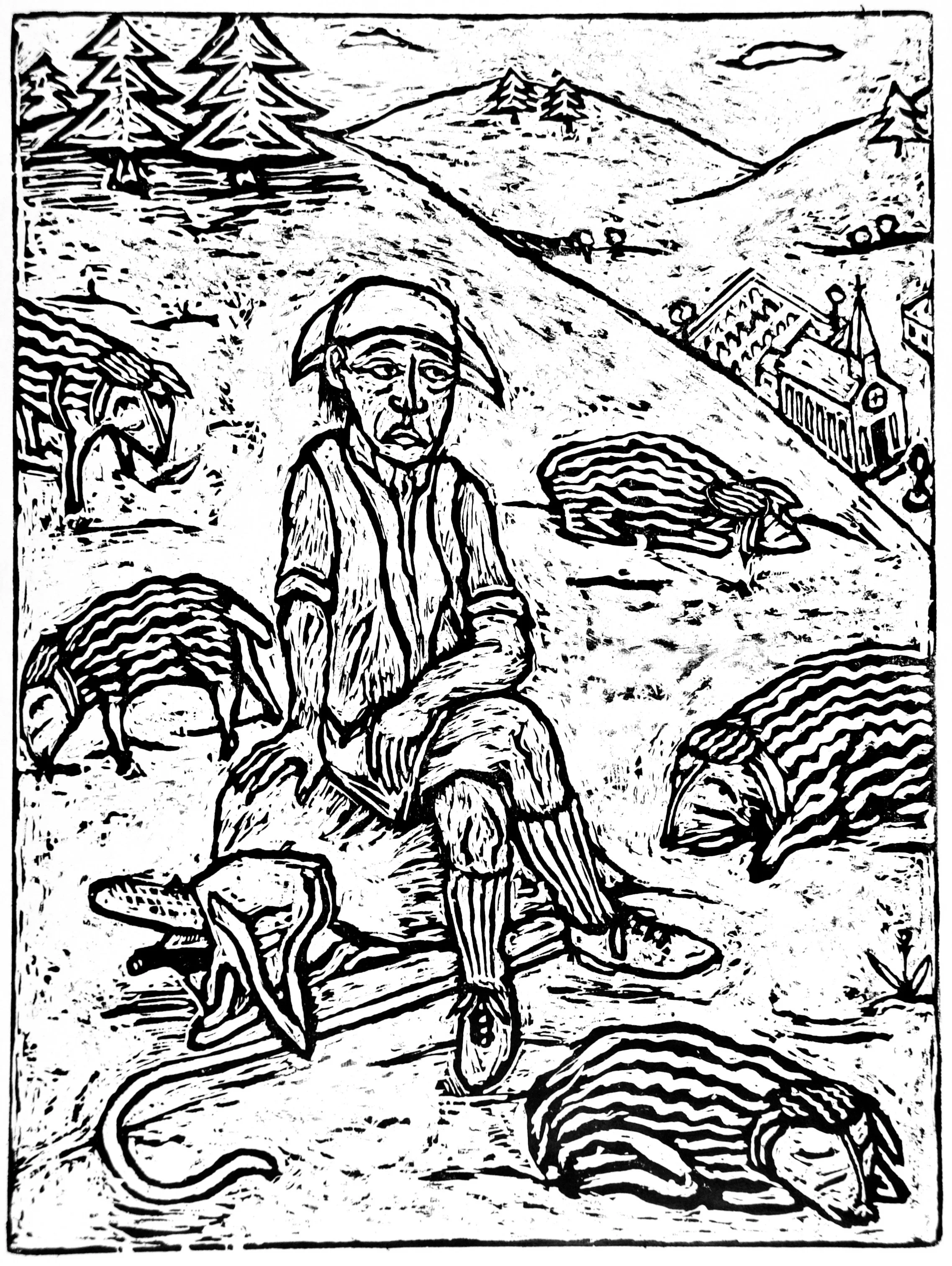
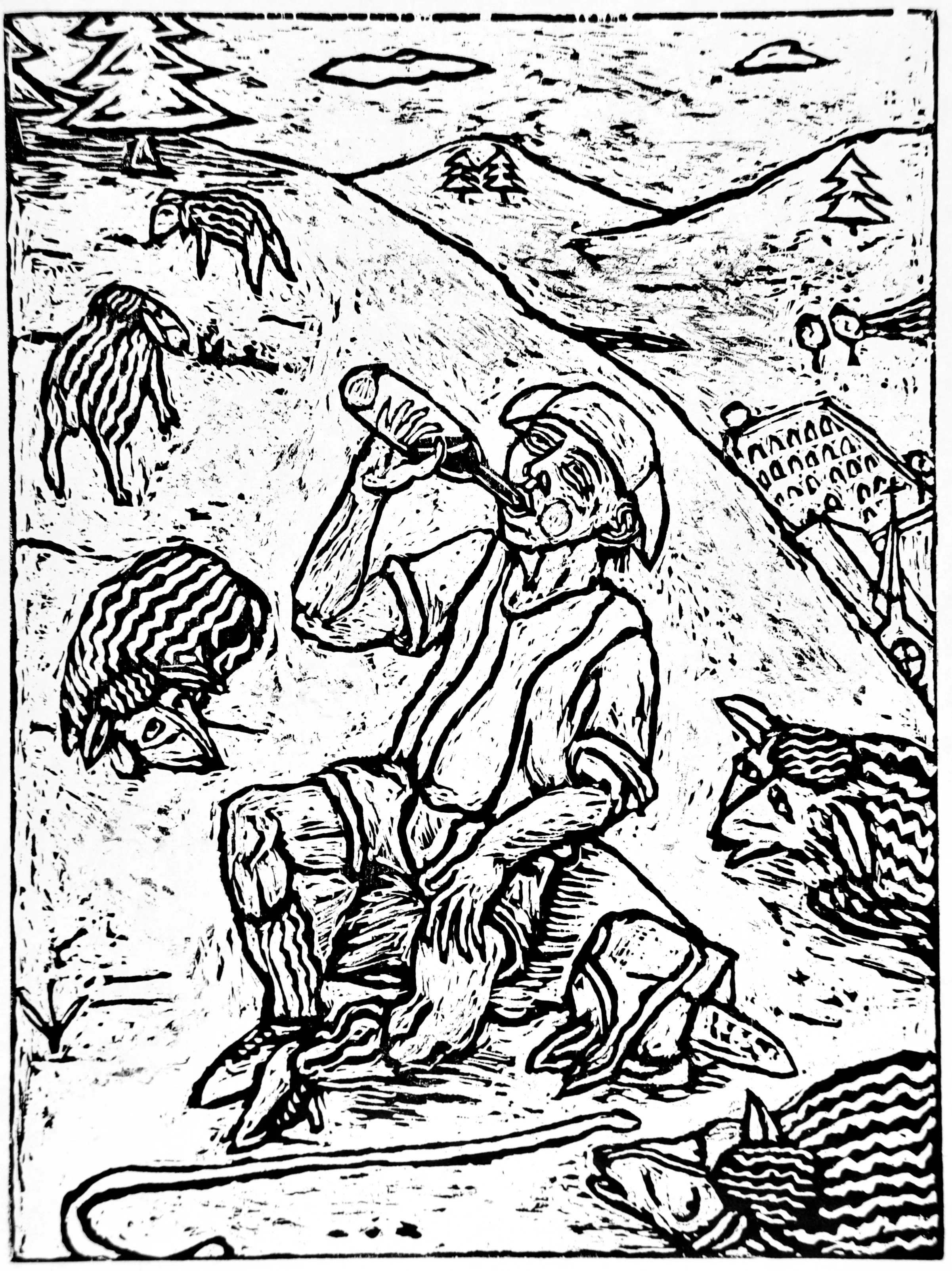
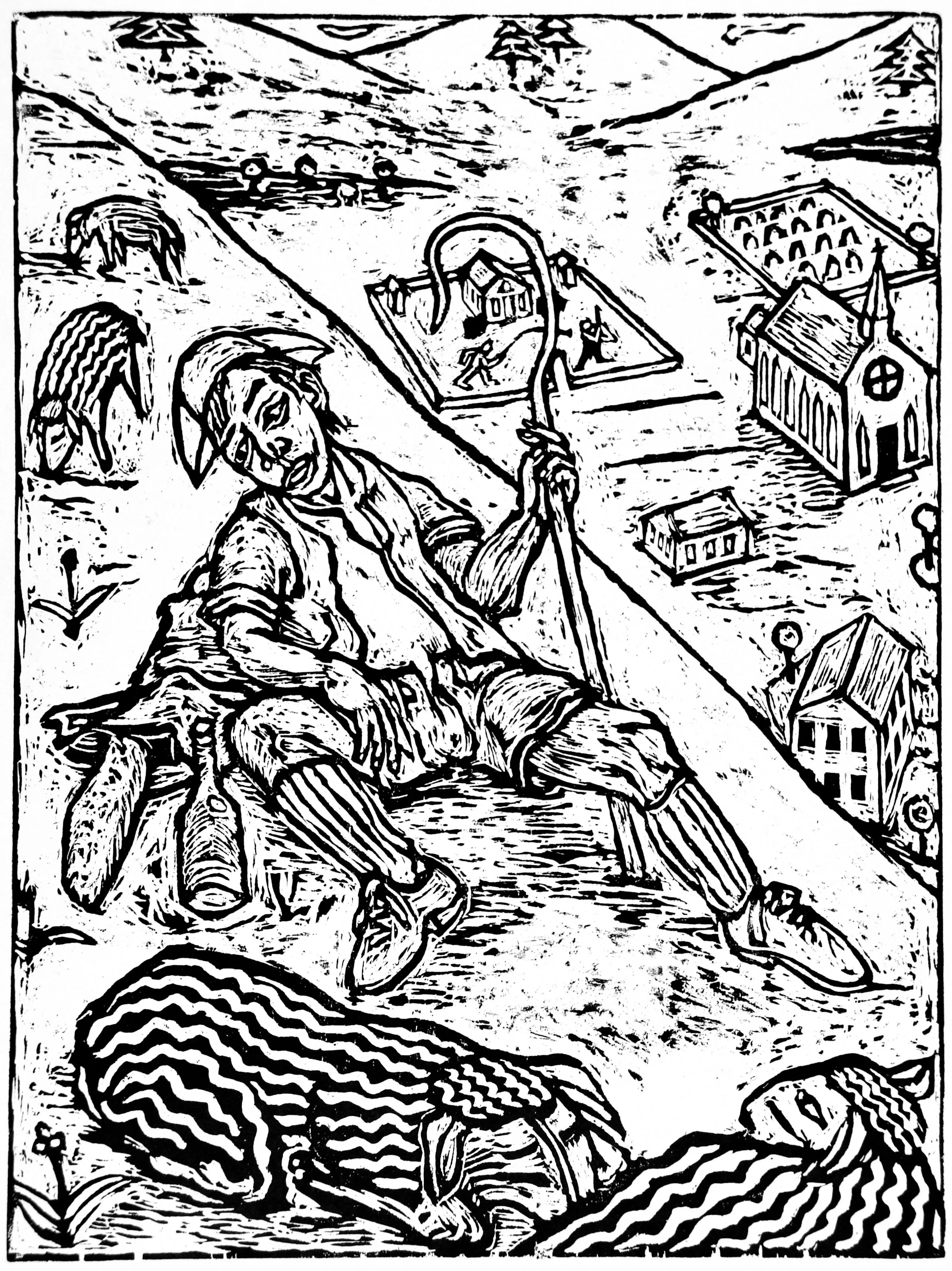
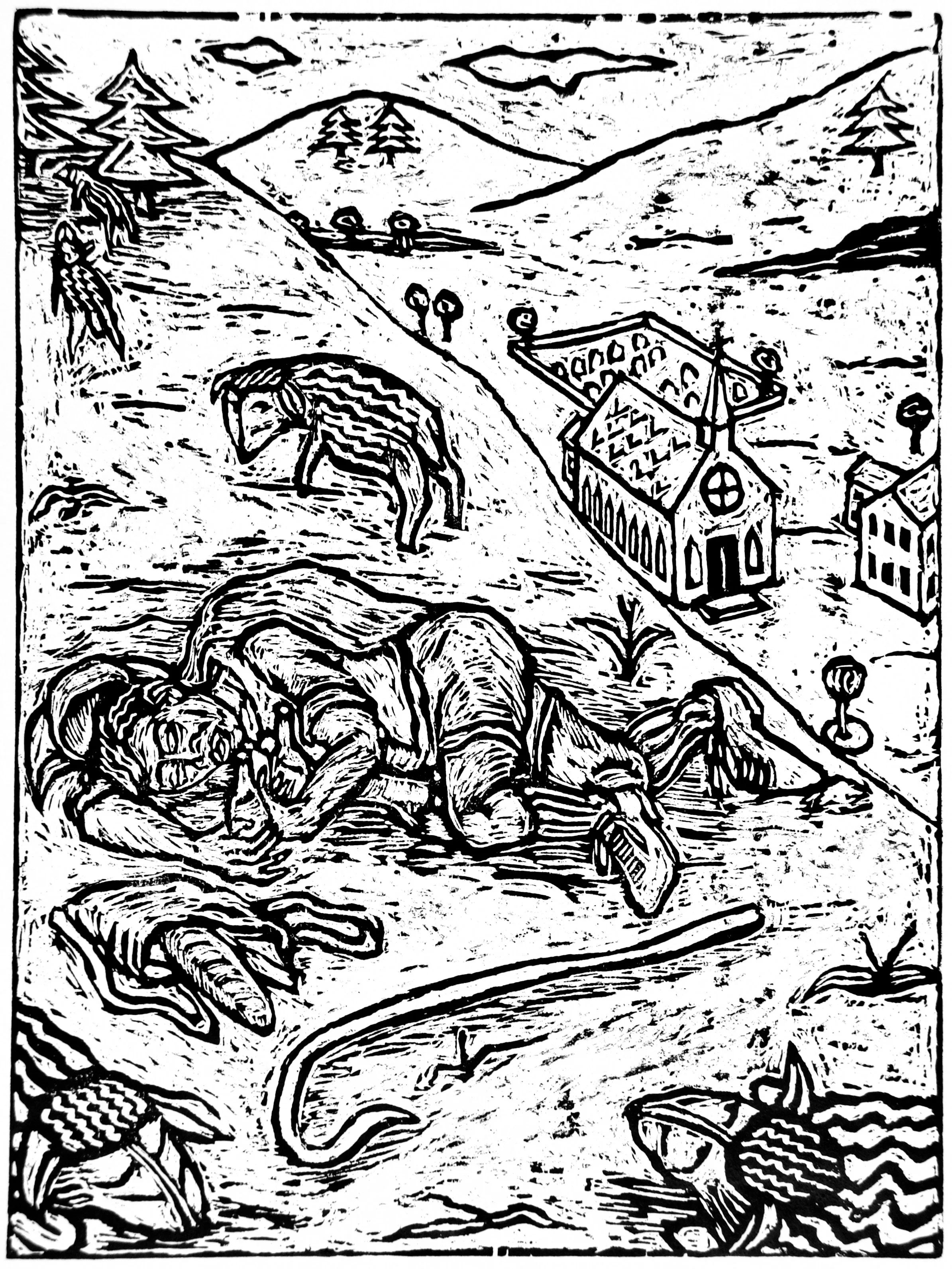
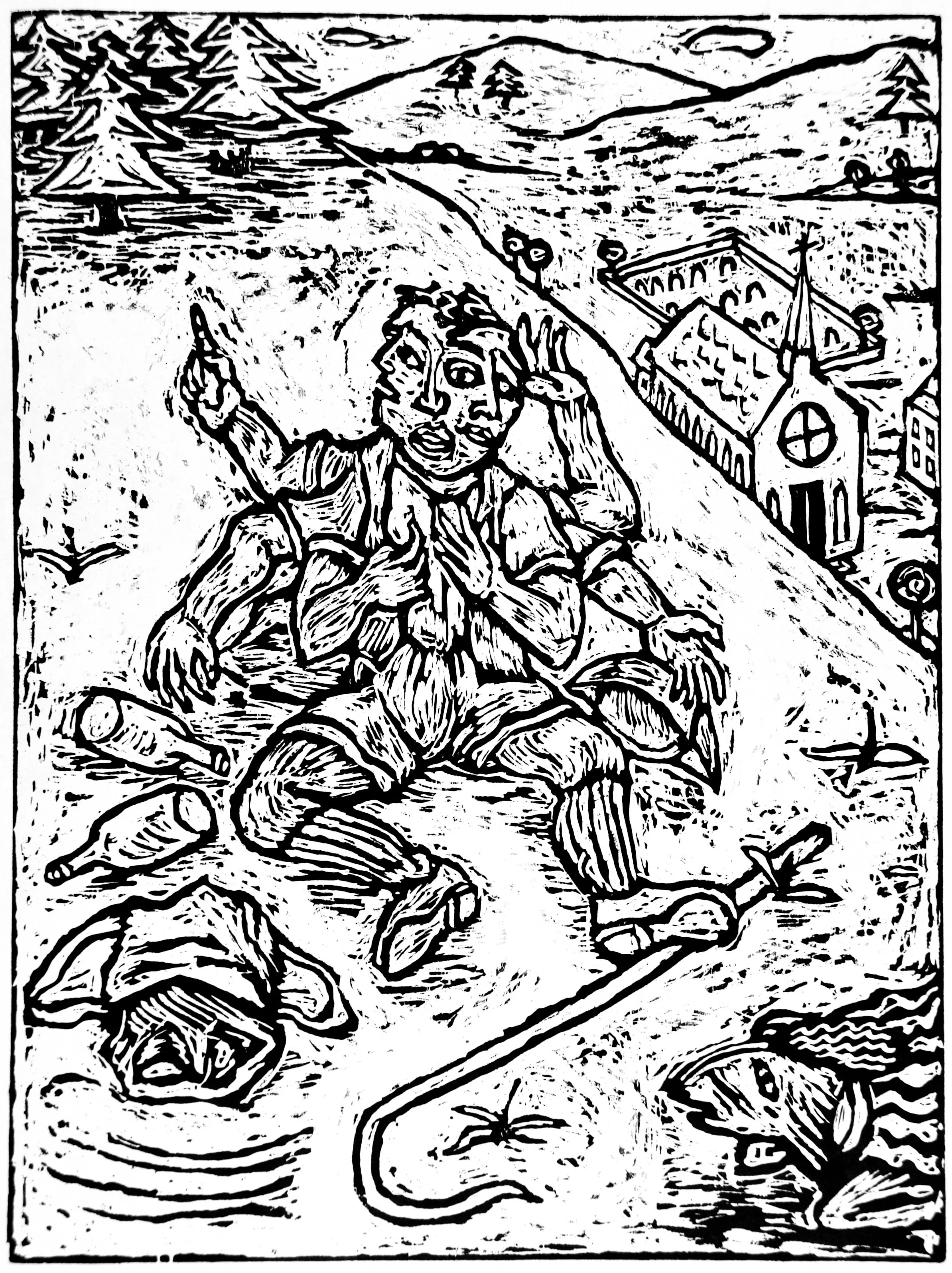
Men from the village raced his aid when the Boy called out for help. frantically he continued to shout, “It’s in the trees! I saw the beast in the trees!”
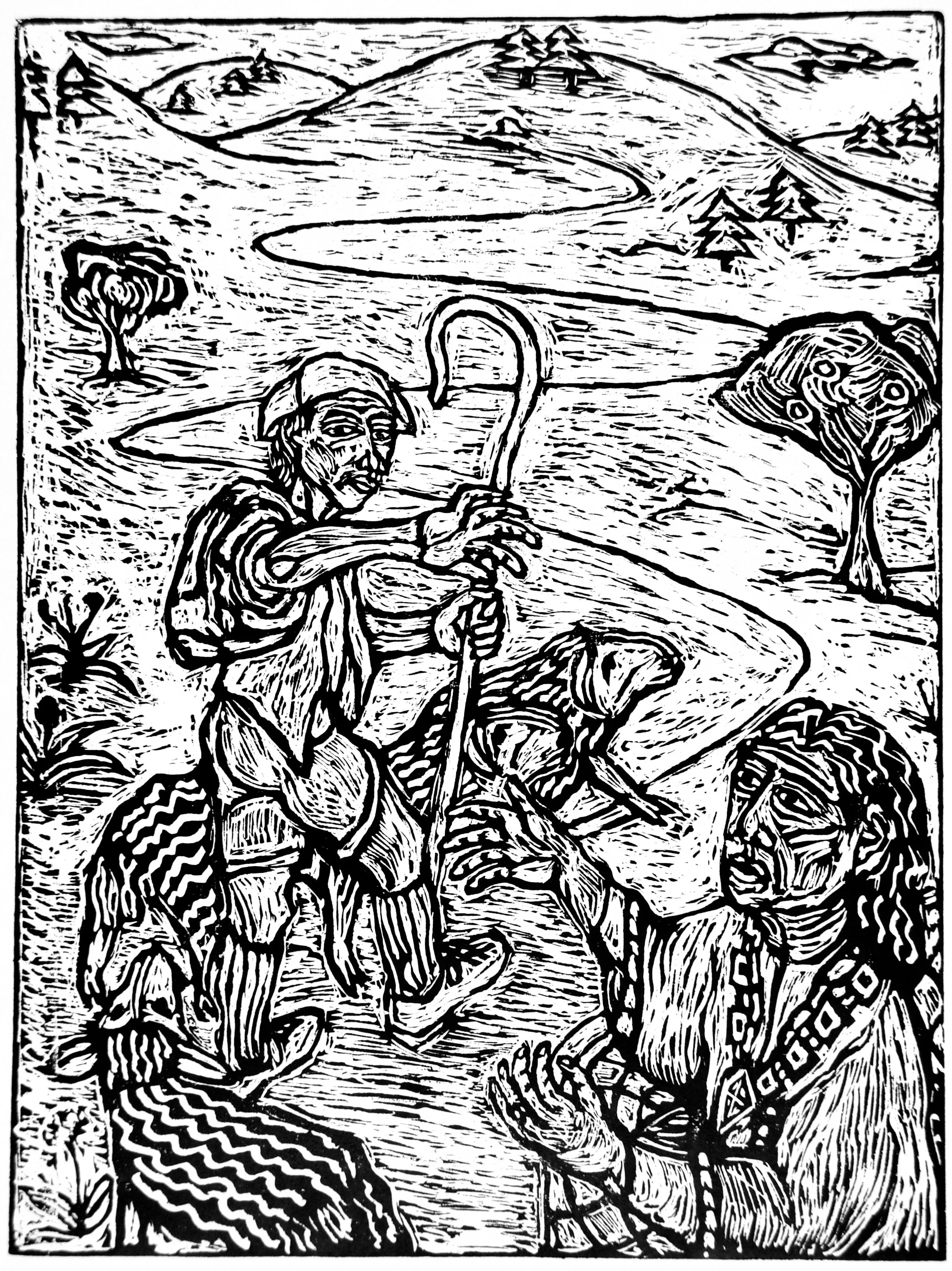
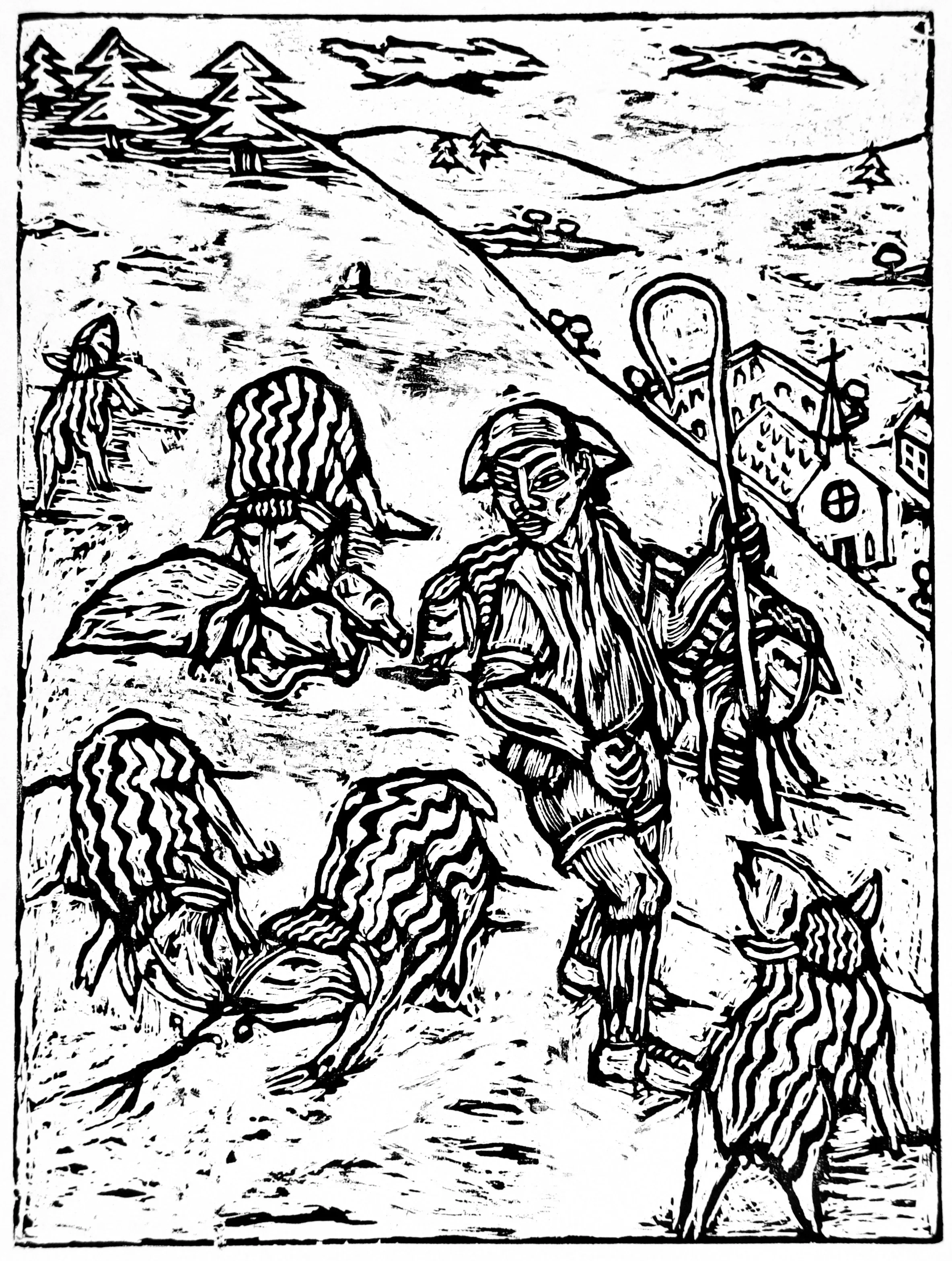
The Boy was given a flock to take to pasture in the mountains. But as with everything else, he ignored his father’s guidance.
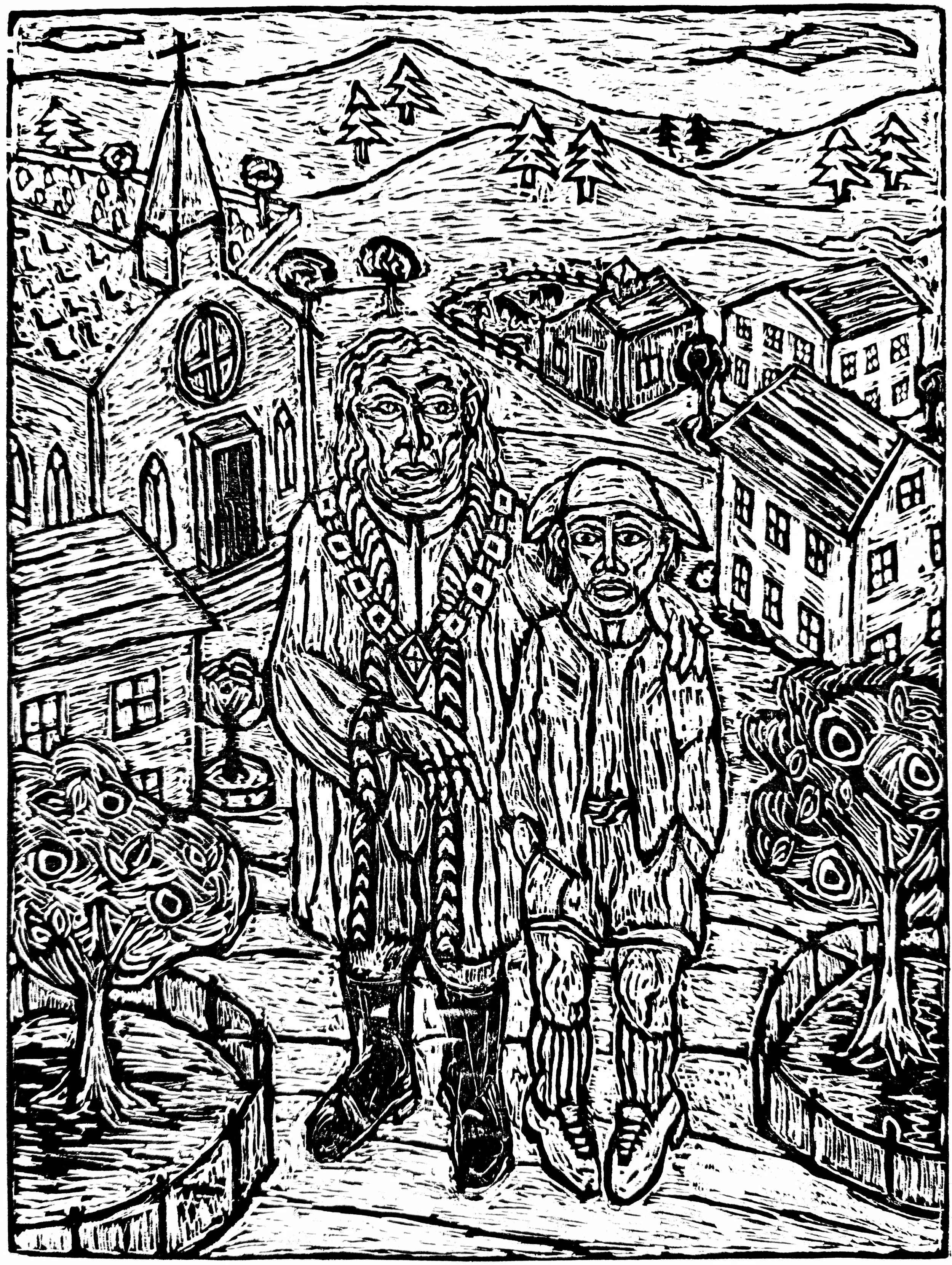
The Boy was the child of money and privilege, and sadly his every whim was satisfied.
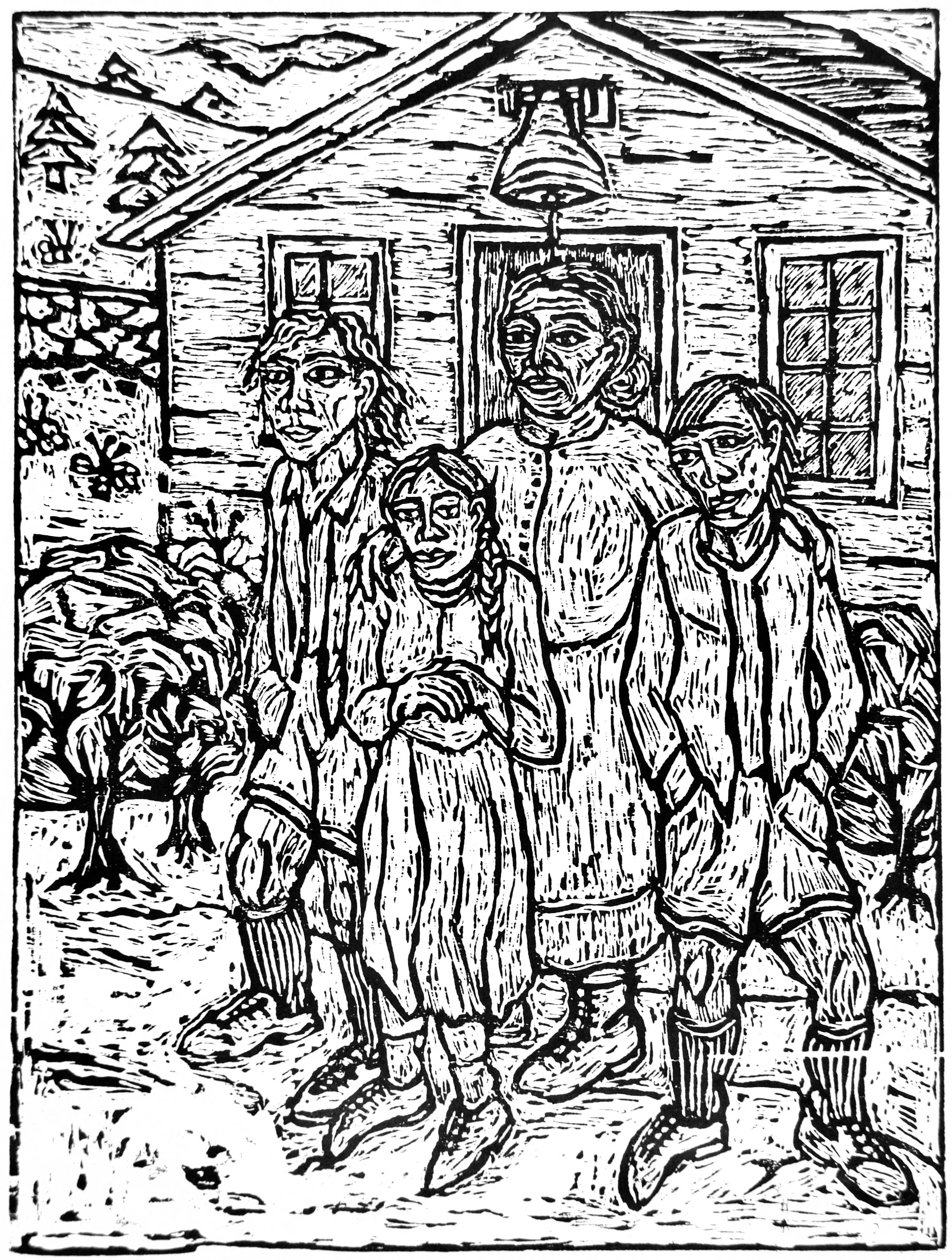
The teacher and the other children were not unkind, but they did not understand why he was there. For the Boy asked for knowledge as one might ask for a sandwich.
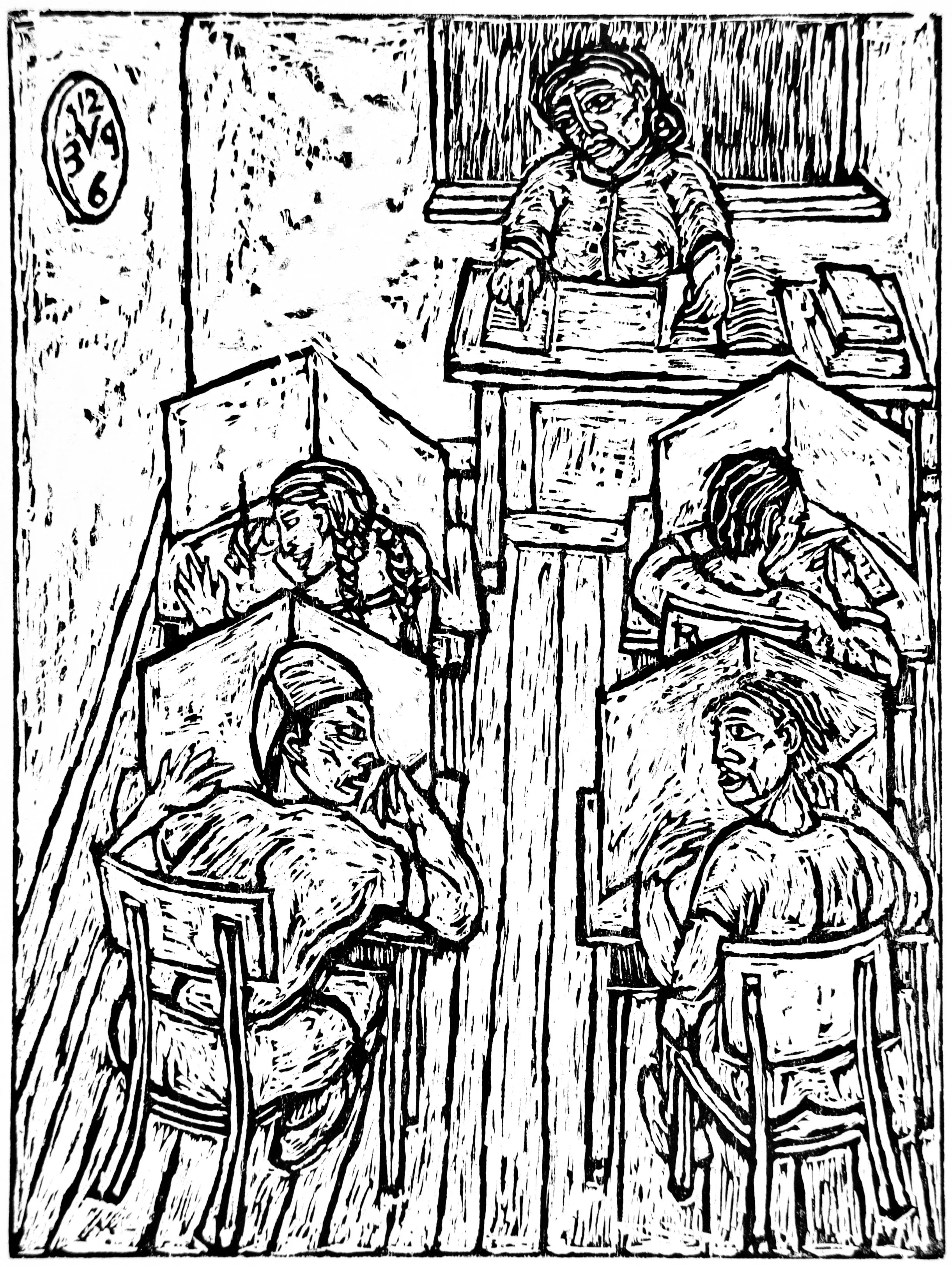
Assessment was a regular and much anticipated event, for the children loved to show off what they had learned. But the Boy had no idea what to write, so he demanded answers from his neighbor.
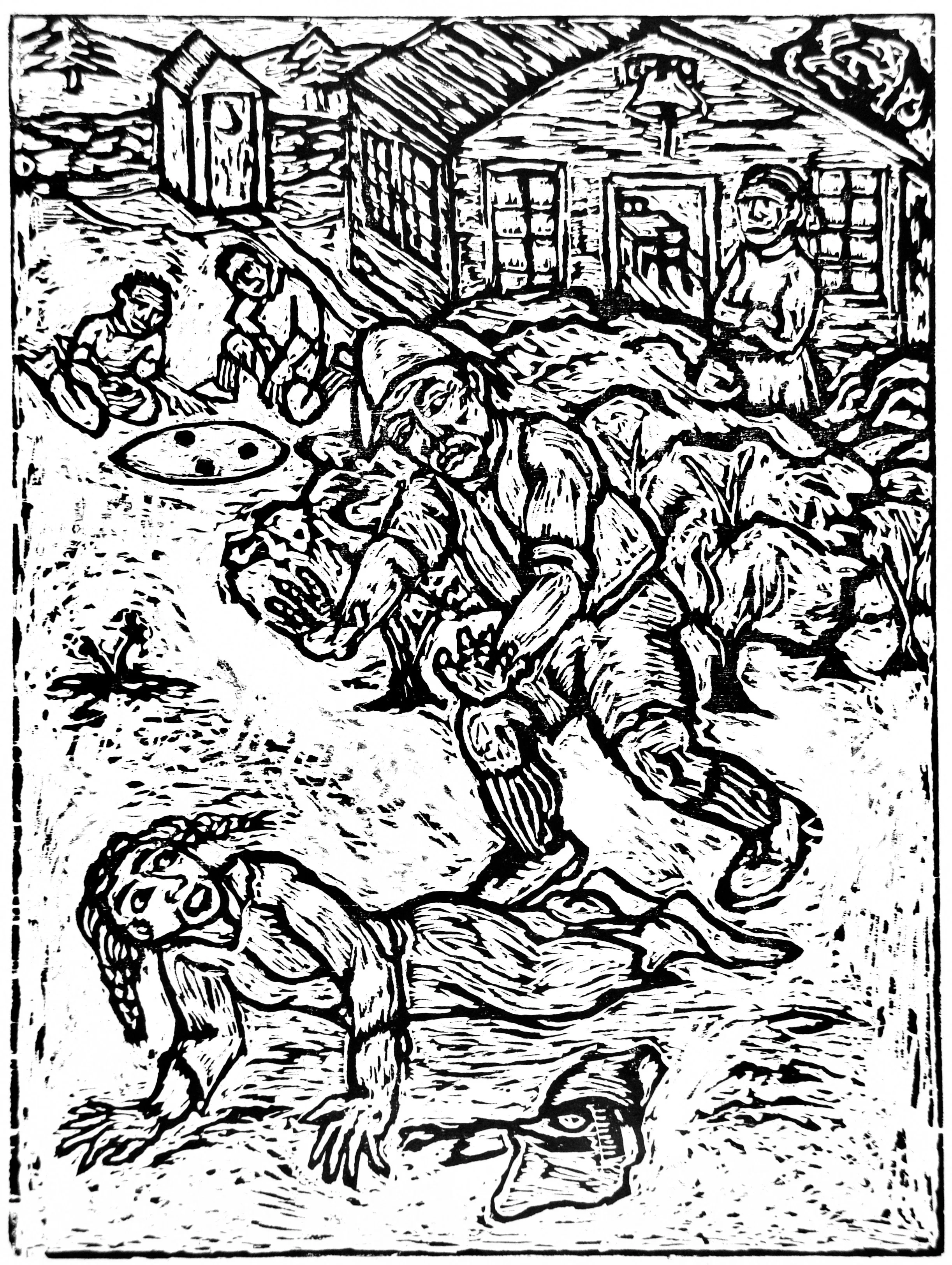
On the playground, the Boy had no idea how to amuse himself, so he asked the girl give him pleasure. When she refused he shoved her to the ground.
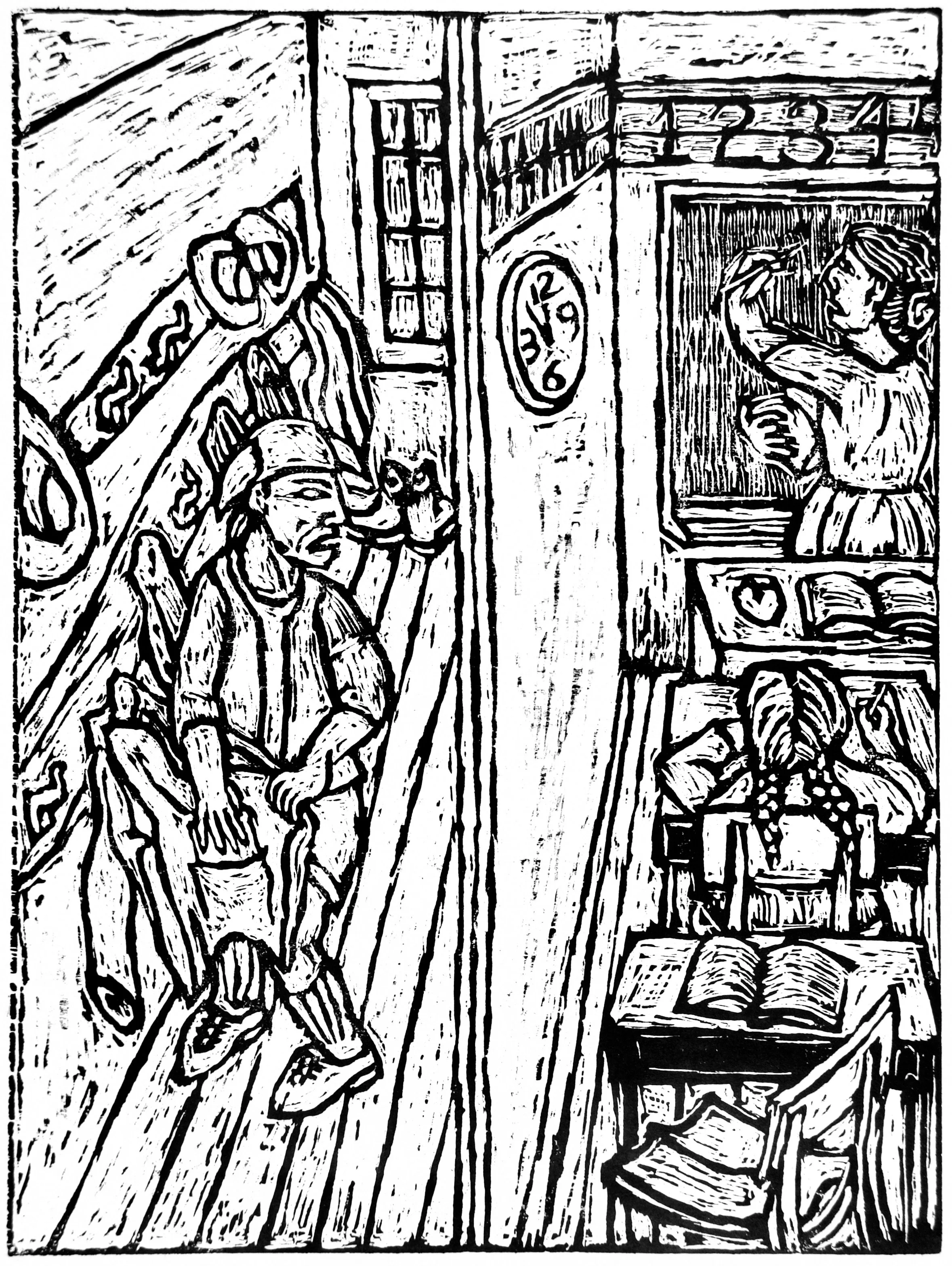
The Boy concluded the school was teaching him nothing. If he was going to be like his father he needed money. So he snuck into the cloakroom and stole everything he could find.
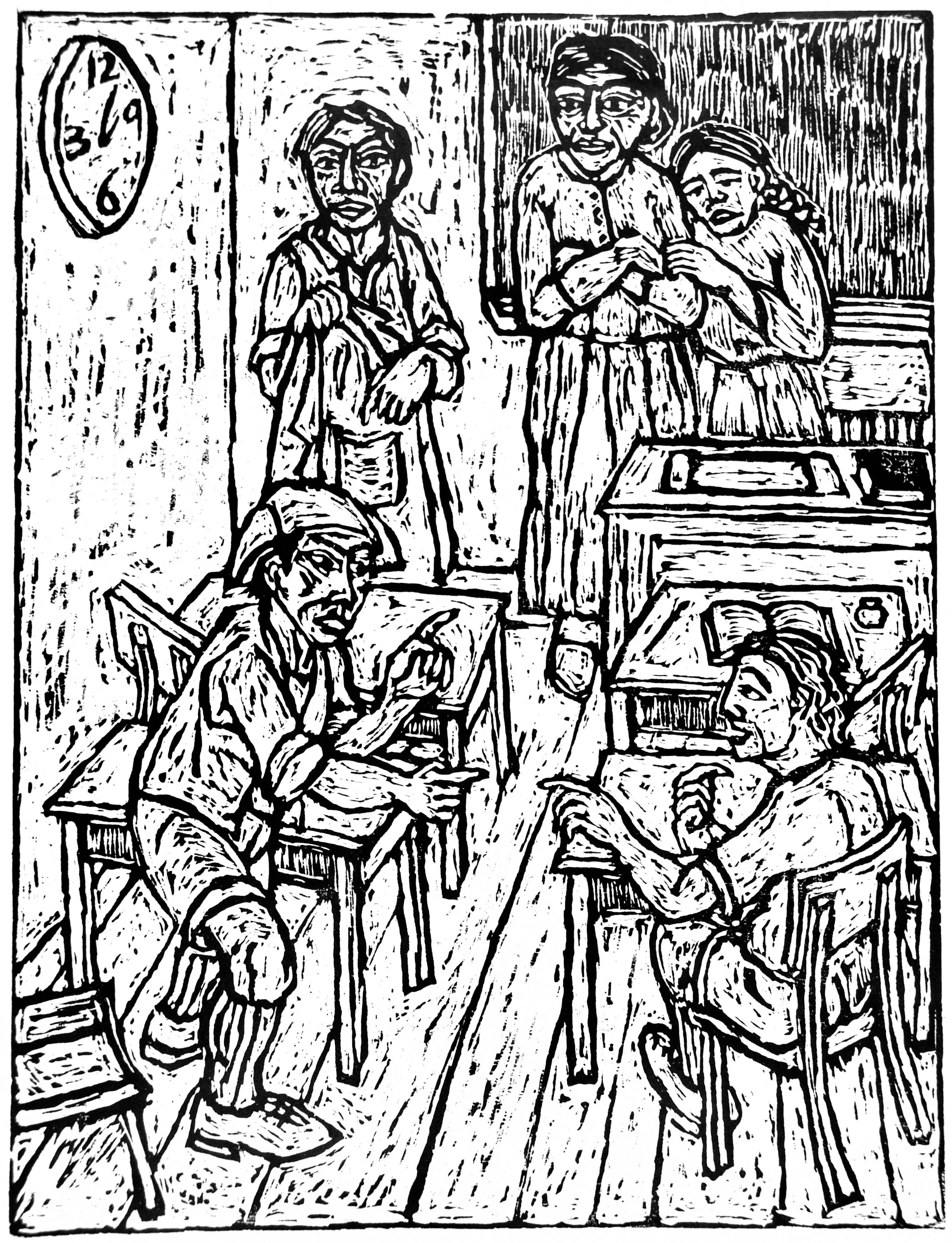
When his action was discovered, the teacher confronted him. But the Boy denied everything, angrily trying to shift the blame to others.
The teacher told the Boy to go home, and return when he was ready to learn. The Boy responded with disgust, “I don’t need you or your school. My father will give me everything.”
Having failed as a student, the Boy was given a flock to care for. “You will start as I did,” his father said. “You will care for them and they will be your teachers.”
Alas, the Boy had no more idea what to do here, for he had never paid any attention to his father’s flocks or the other shepherds who cared for them.
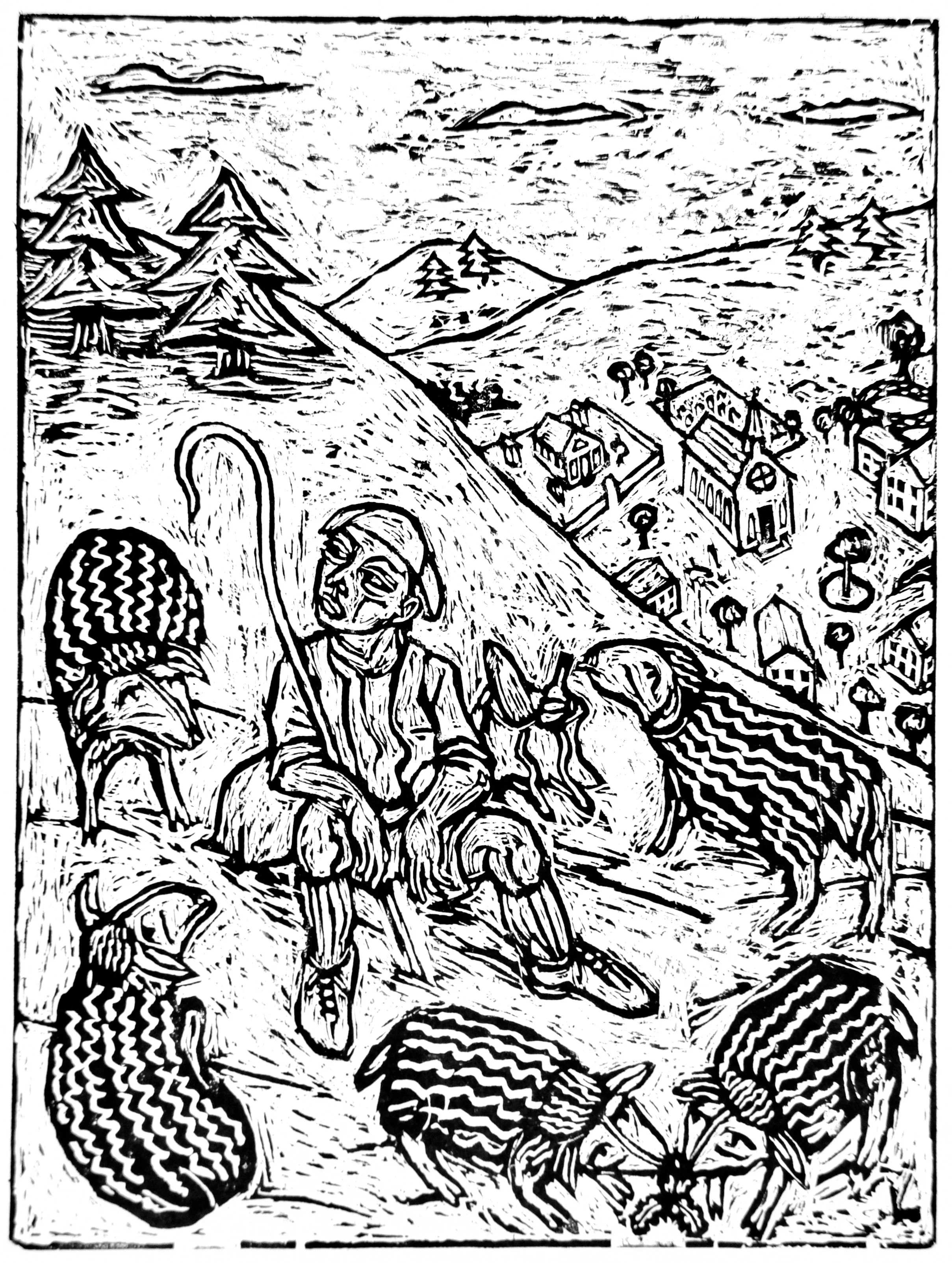
Remarkably, the Boy had absorbed no knowledge of what was expected of him once he reached the meadow. He simply paced and stared down into the village below, wishing he were still there.
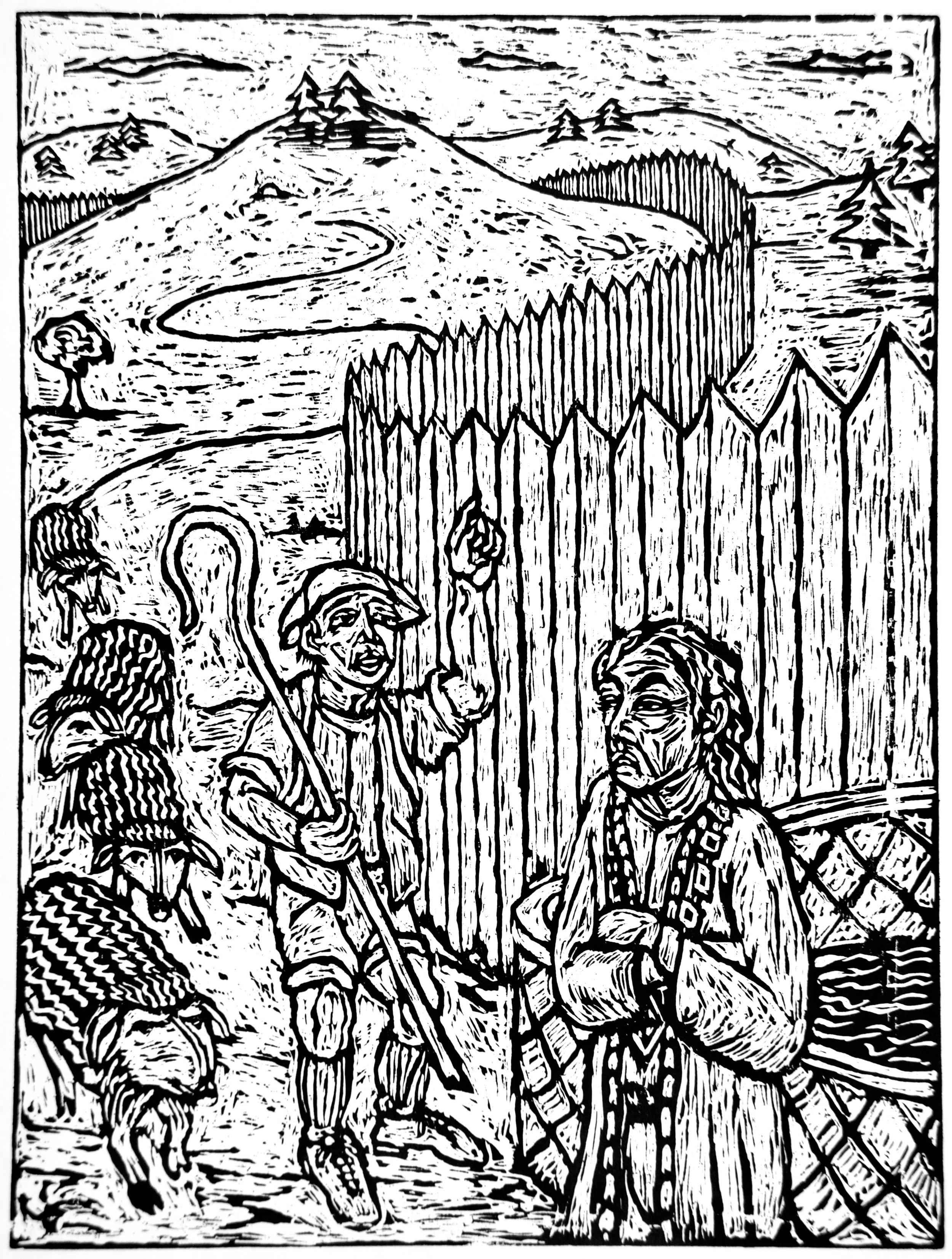
When he returned, he proposed to his father that a wall be built around the mountain. The sheep would be safe, and he could stay home. His father looked at him as if he were speaking a foreign tongue.
Returning to the Mountain, the Boy tried to fathom what his father wanted his to do. Where was the danger? What was he to protect the sheep from?
Alone with his thoughts, the Boy’s mind drifted, recalling stories from the cradle and childhood terrors. Tales of monstrous beasts that could overpower any man. Was that why he was here? Staring into the shadows he began to see shapes moving in the darkness.
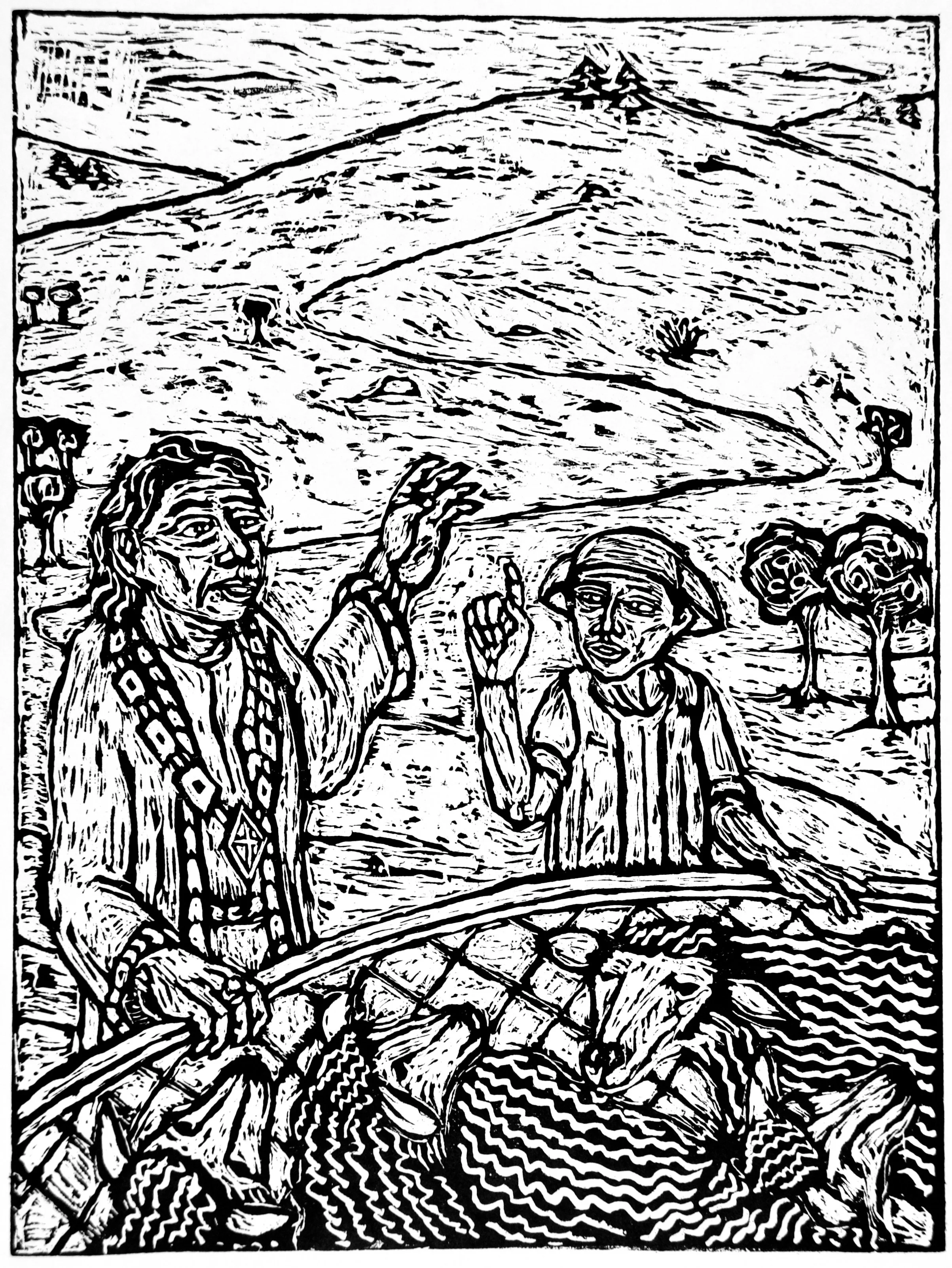
He must have passed out, for the men from the village had appeared as if from thin air. They searched the meadow but found nothing. “Do not be ashamed,” they told him. “Your mind can play tricks. Listen to your sheep, they will guide you.”
Slowly the Boy began to accept his fate. His father must be testing him somehow. But a sense of hopeless grew along side the acceptance. How was he ever to survive. He created games in his mind, fantasies that the world below all belonged to him, and was quietly waiting for his return.
Wine had been packed in his satchel with his lunch from the beginning, but the Boy had no taste for it. But now in his boredom he sampled the beverage, and found that the dry, bitter drink warmed his blood and lightened his mood. And if he drank enough of it, he did not feel so all alone.
The servants at home were the first to notice the change in the Boy, for he now seemed friendly and interested in their activities. In reality he was searching for the wine cellar, as a single bottle no longer was sufficient to get him through the day. For now he spent his days lost in a drunken stupor, imagining that he ruled all he could see.
Between the sun and the wine, the Boy was soon overcome, and took to taking long naps after his lunch. He had never paid much attention to his flock, and failed to notice that they were foraging further and further away in search of food. Instead he lay curled in a ball dreaming, imagining that he was walking hand in hand with the girl from the school, laughing at his father’s foolish attempts to keep them apart.
When the Boy awoke he was startled to find himself virtually alone, all but one of his flock had vanished. In a panic he searched the meadow. He was afraid to call for help, but he had no choice. But first he must hide the bottles.
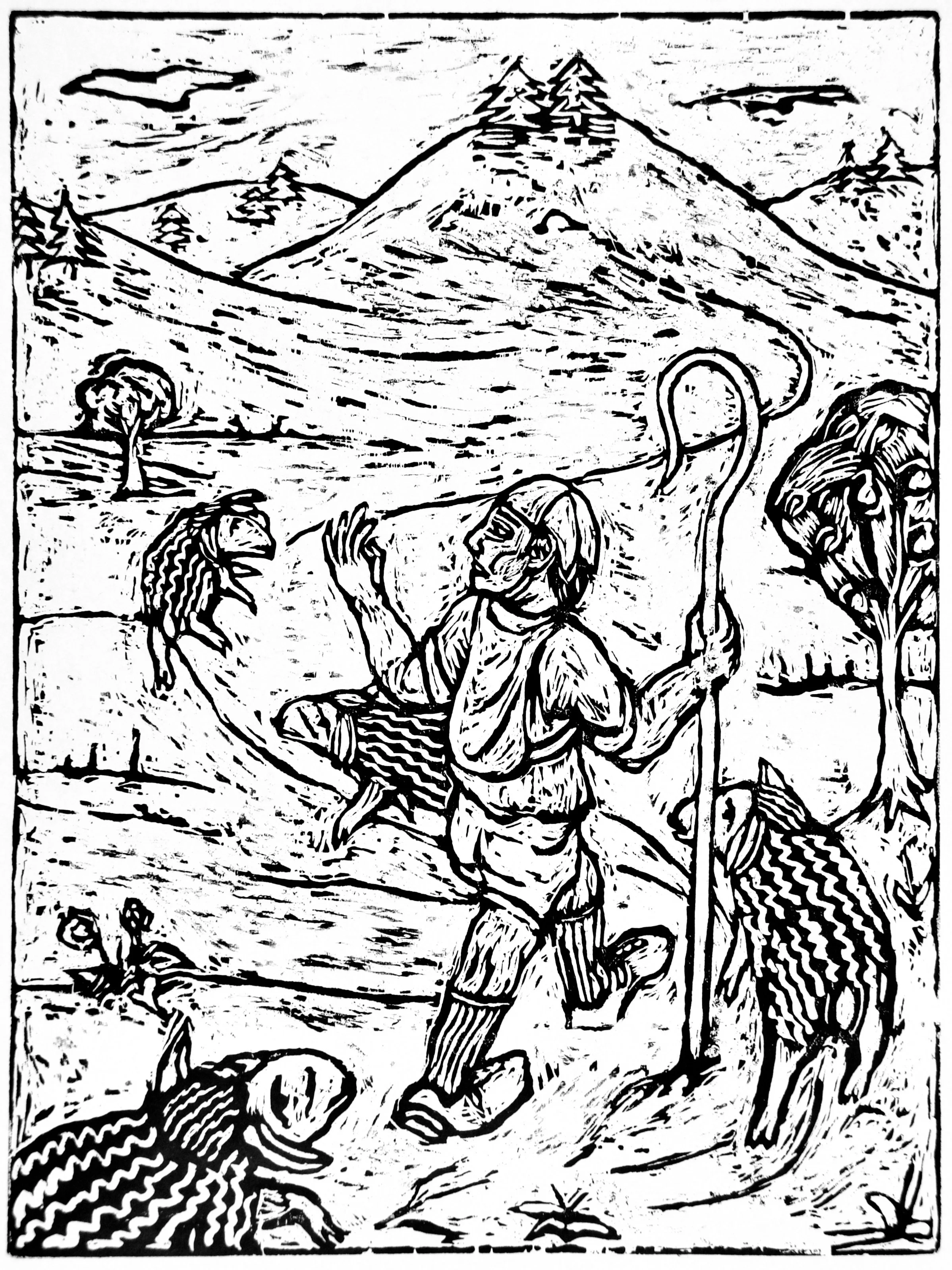
Cleaning himself up as best he could the Boy prepared a story. He had tripped and hit his head. When he woke up the sheep had vanished. Mounting a boulder like a pulpit, the Boy began to call out. Screaming for aid until he thought his throat was on fire.
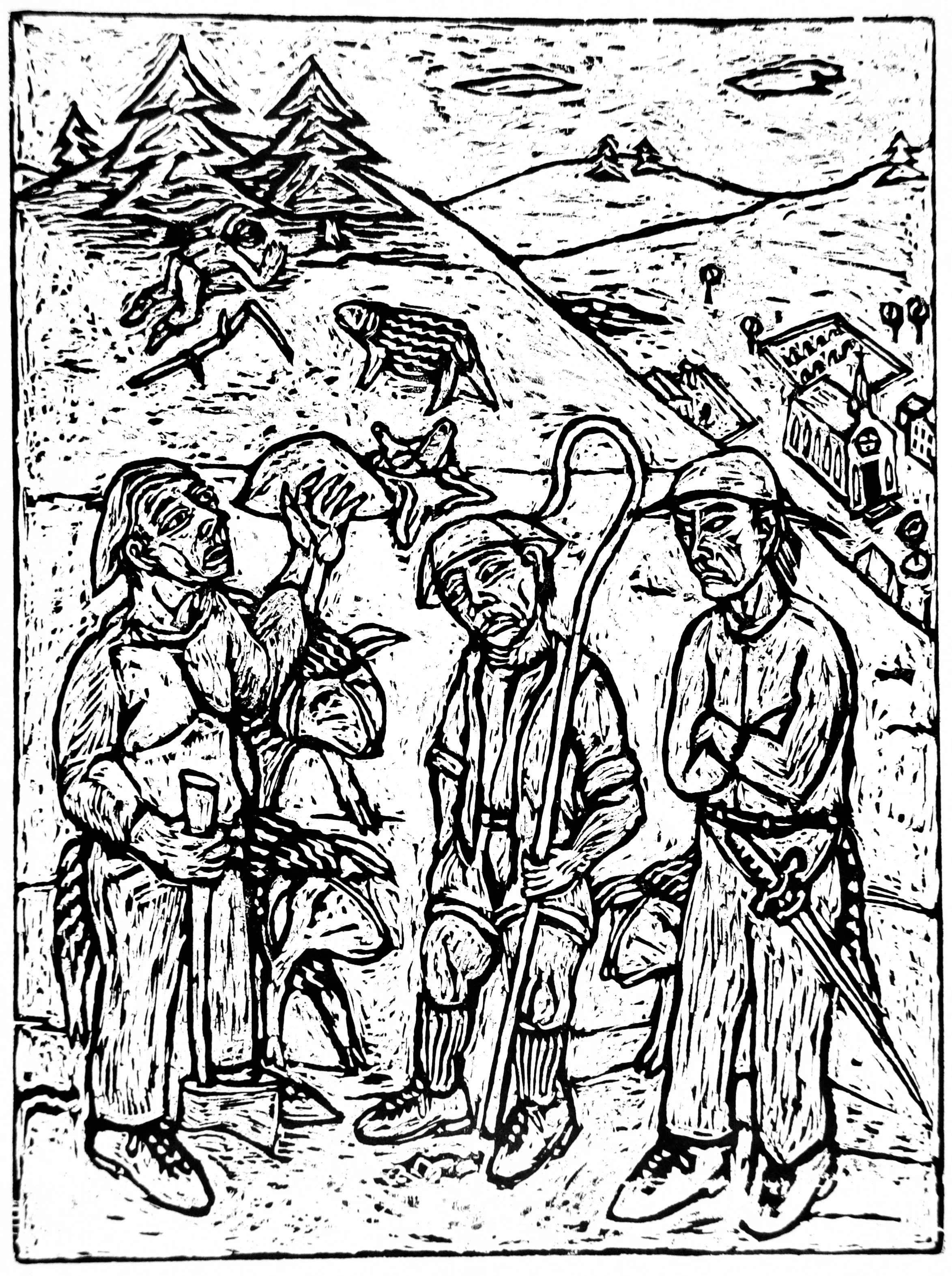
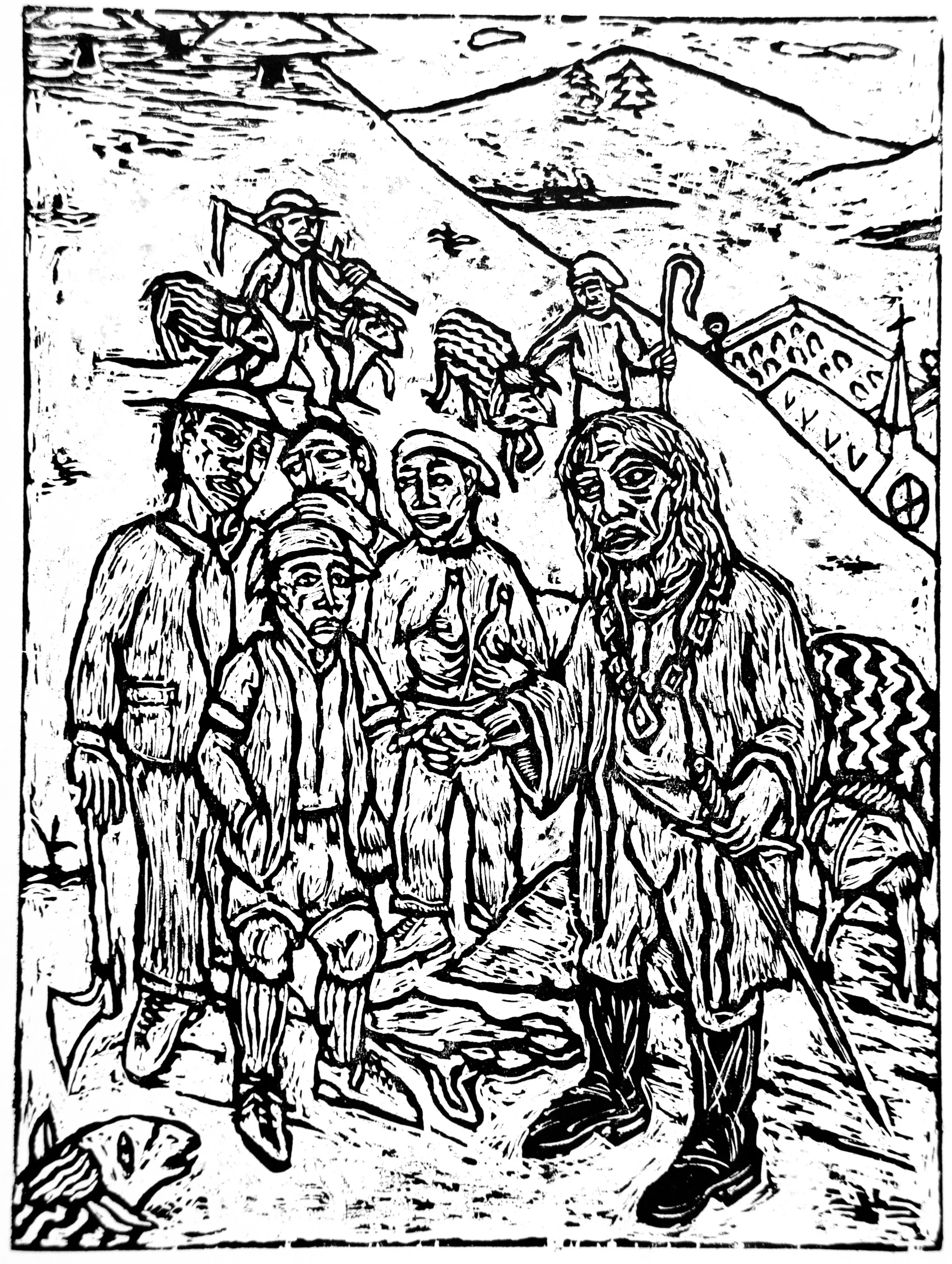
Again the men from the village appeared with clubs and rakes to drive off the intruder. But all they found was that the sheep had wandered off, and a stash of empty bottles hidden in a thicket. When the Boy’s father discovered the state he was in, he was furious, “You claim to be my son,” he roared. And then insisted that the Boy apologize to each man individually.
A numbness came over the Boy, and he stopped speaking when he was in the village. Though he could be heard muttering to his flock as he ascended the mountain each day. His father’s deputy came to him privately, warning him that his son seemed to have moved close to the abyss. “Nonsense,” he countered, “He is my son, he must rise above this.”
But the fears were not unfounded. His feeling of isolation now complete, the Boy began to obsess over his flock. He prodded them incessantly on the climb, and once in the meadow, he patrolled among them, blindly trying to impose his will. And if they irritated him, he used his crook to drive them away.
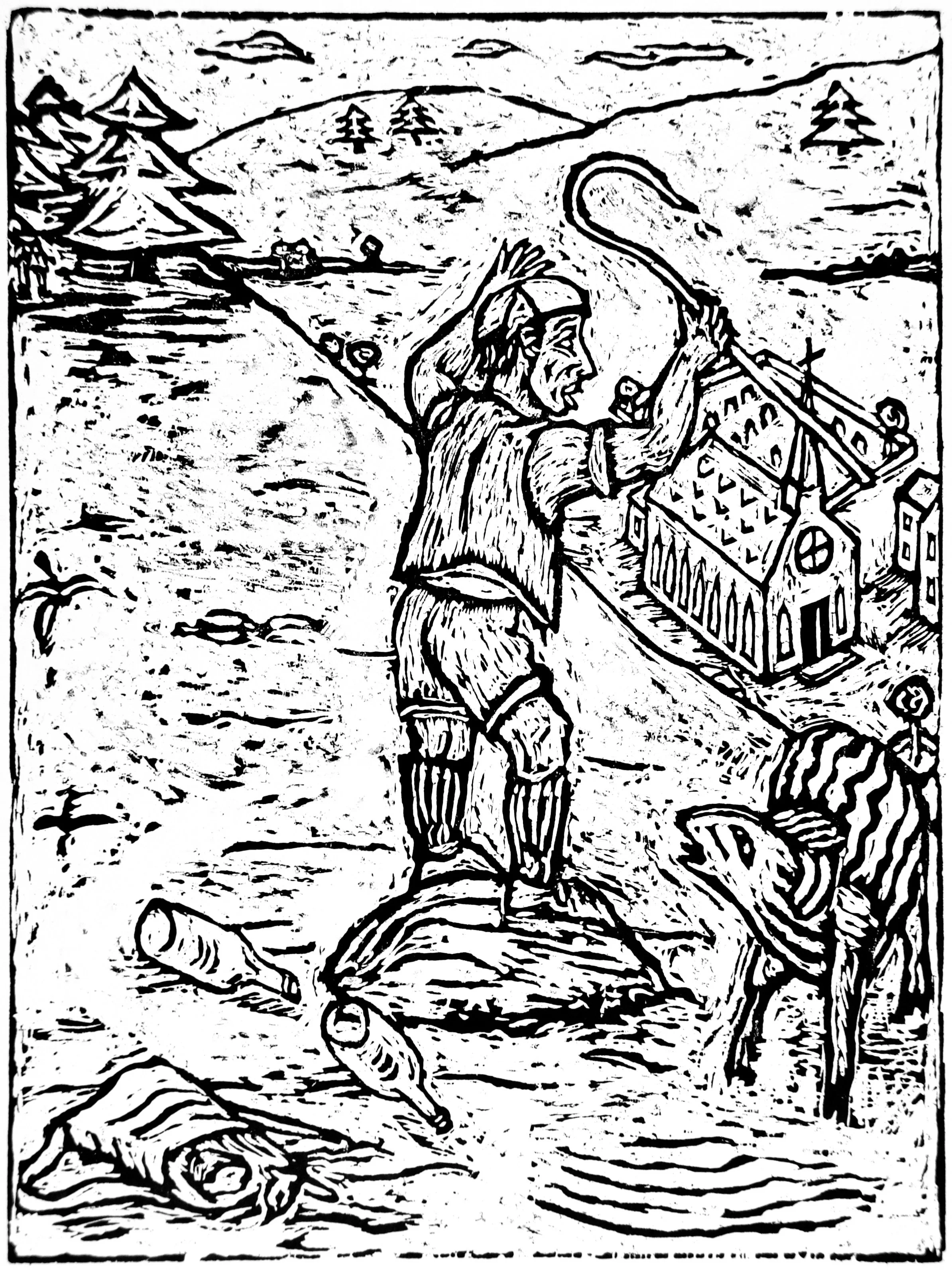
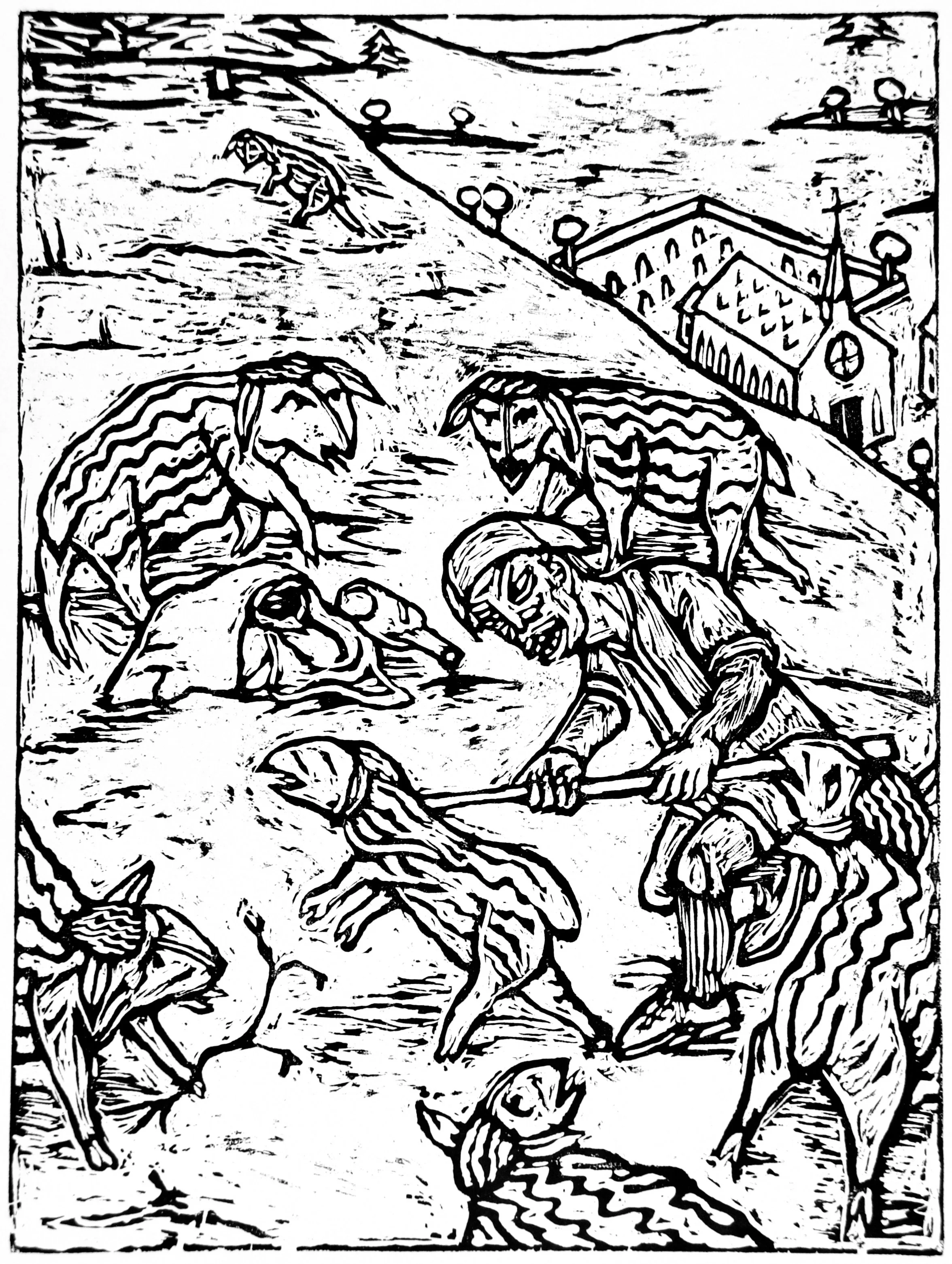
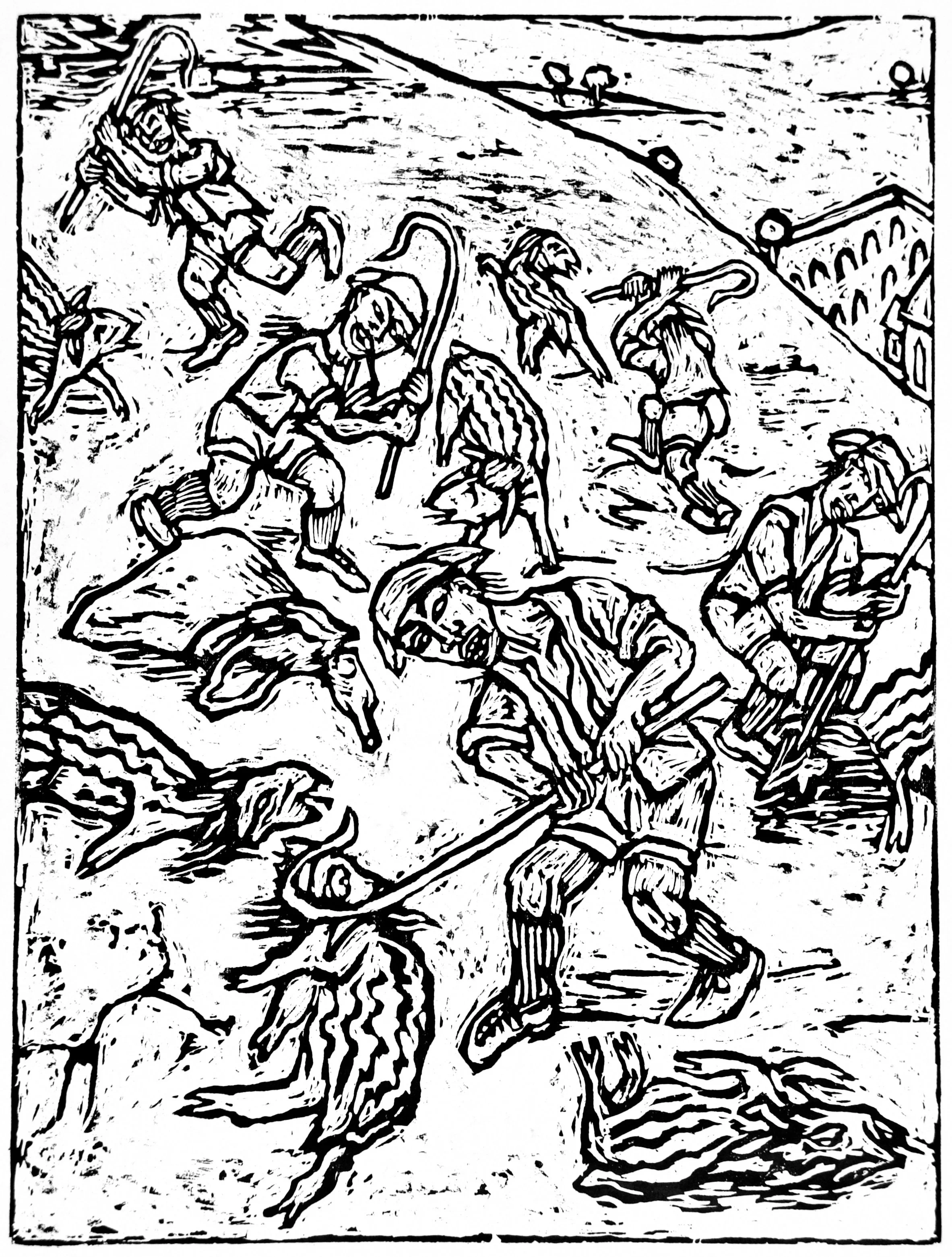
Eventually it was all too much for him. There were two young rams in his flock, who fought over every patch of fodder. No one, especially the other sheep paid any attention. But it drove the Boy mad, and he violently hooked the nearest one with his crook to pull it away. The reaction was immediate, and two of the old ewes charged him.
His first blow was probably accidental, but it shattered the skull of a ewe behind him and she dropped dead to the ground. He was charged again, but now he attacked in turn. Swing wildly at first, but then with focused intent, and he did not relent until he had slain them all.
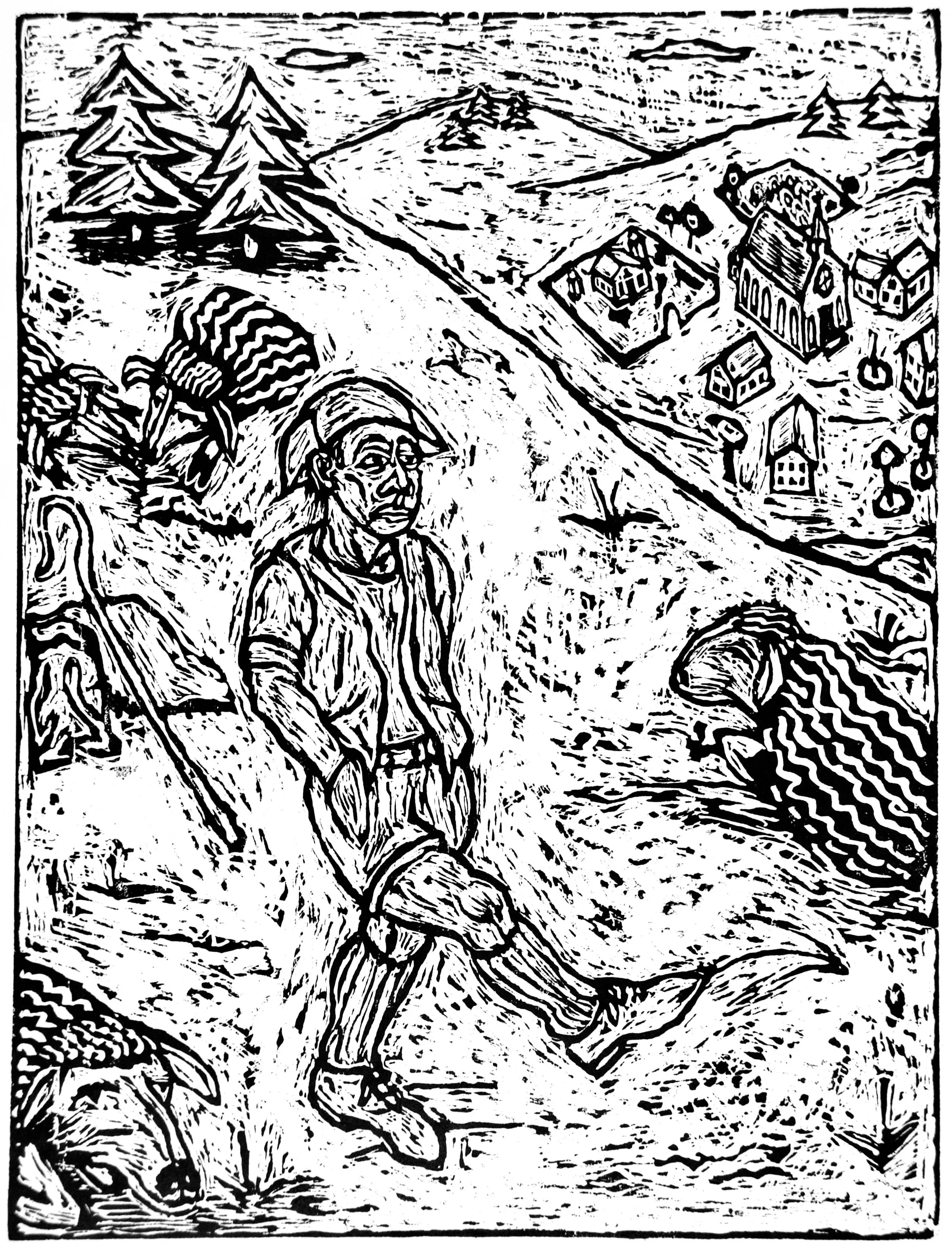
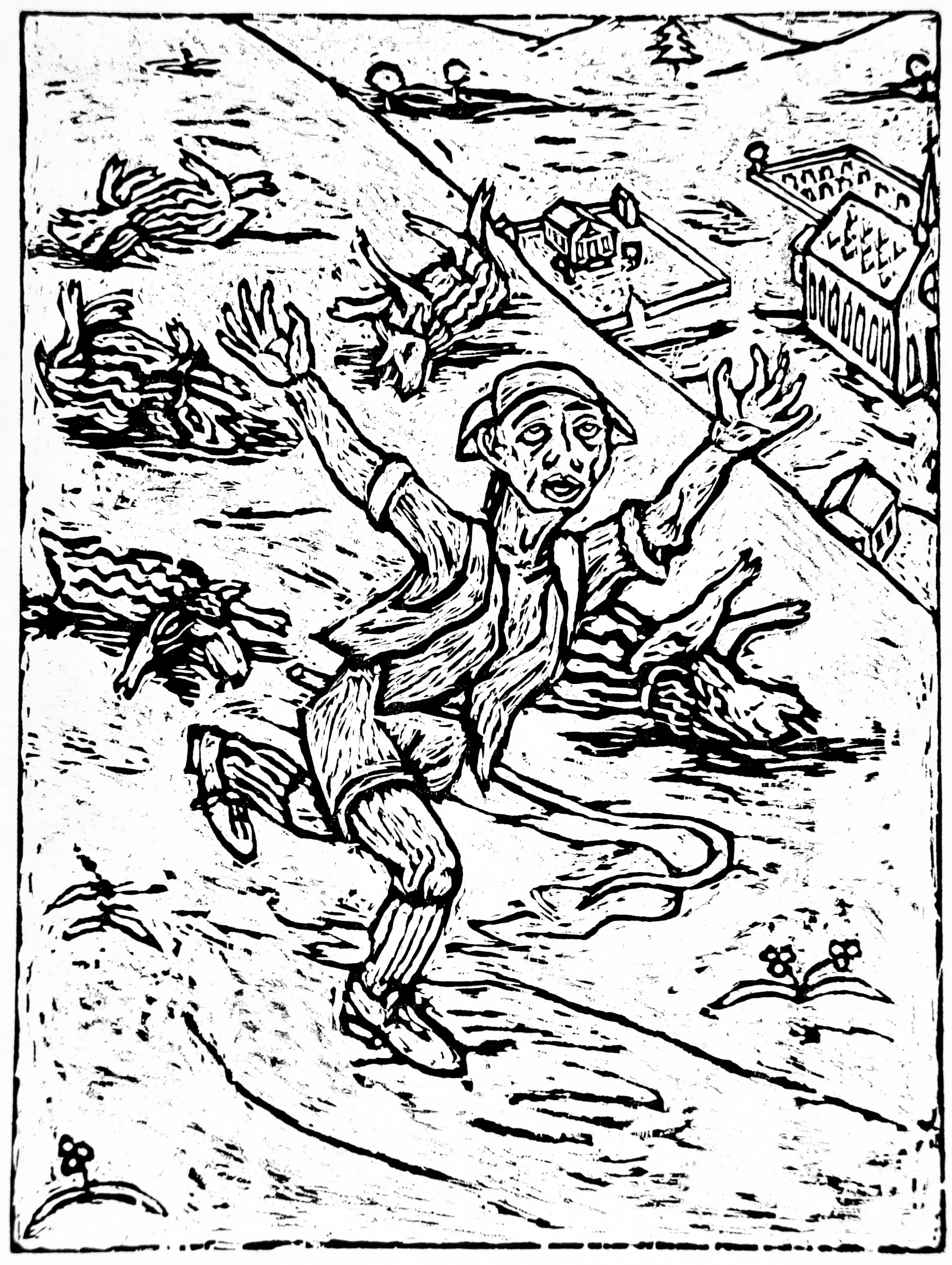
He collapsed, exhausted by the ordeal. When he regained consciousness he had no memory of what had happened. Scanning the meadow he saw only death, looking down he saw only the blood of the victims splattered across his body. In horror he stumbled to his feet and fled down the mountain.
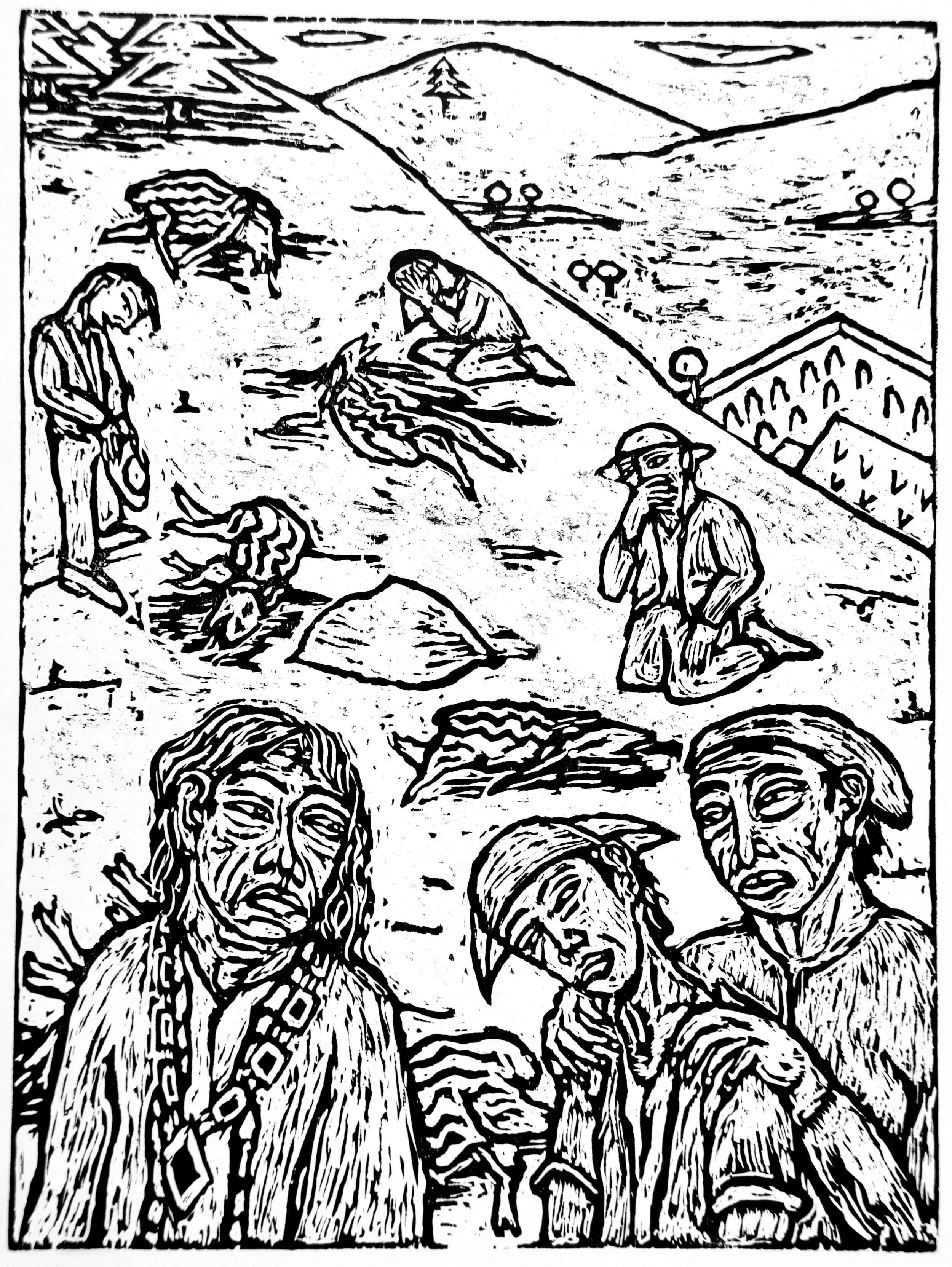
The Boy had been incoherent, and those first to arrive assumed he had somehow driven off a pack of wolves. But it was soon apparent that the wounds were all manmade, and the villagers knelt and wept over the victims. He father consoled them as best he could, and then arranged for the bodies to be removed, and for his son to be imprisoned.
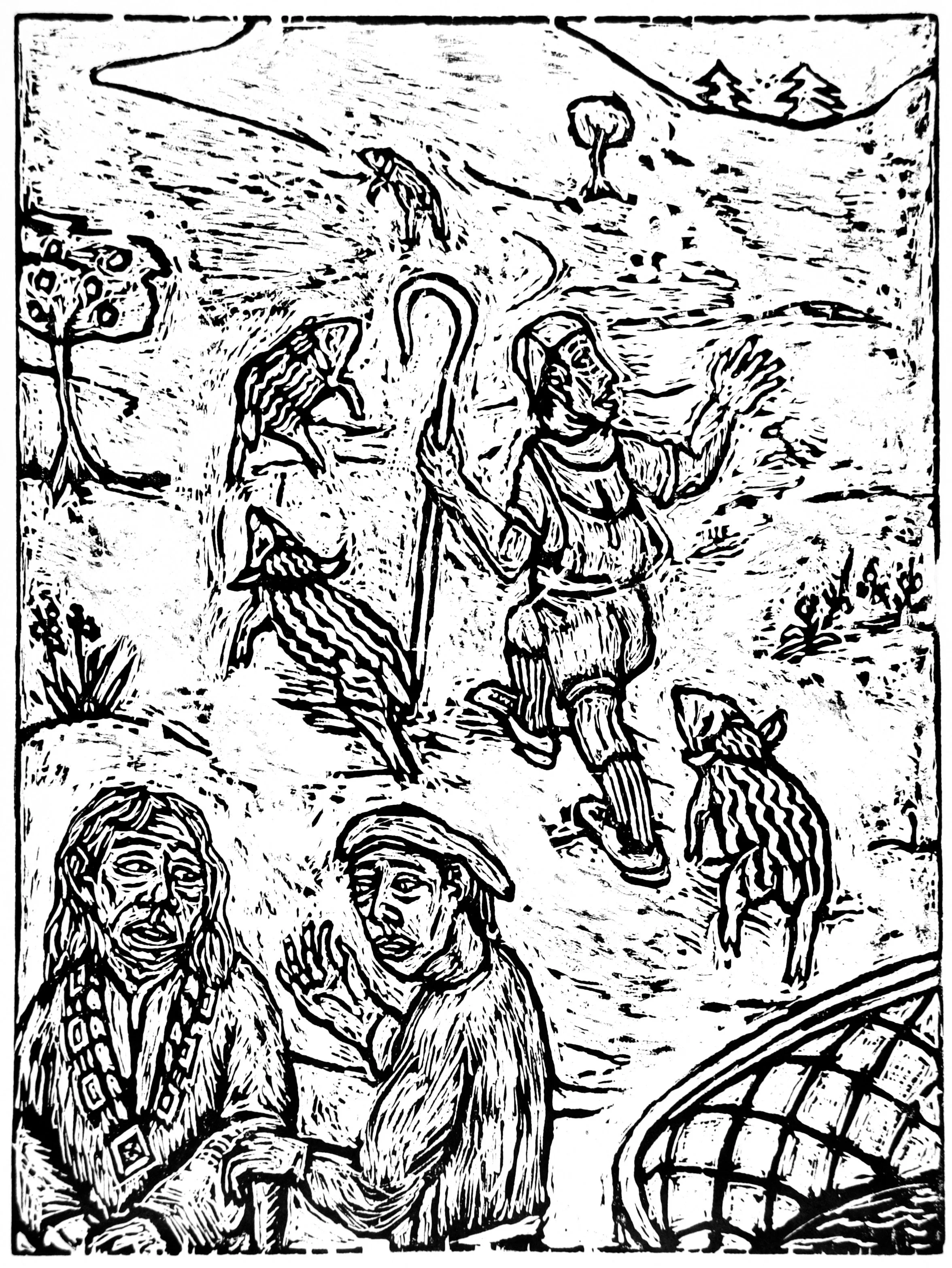
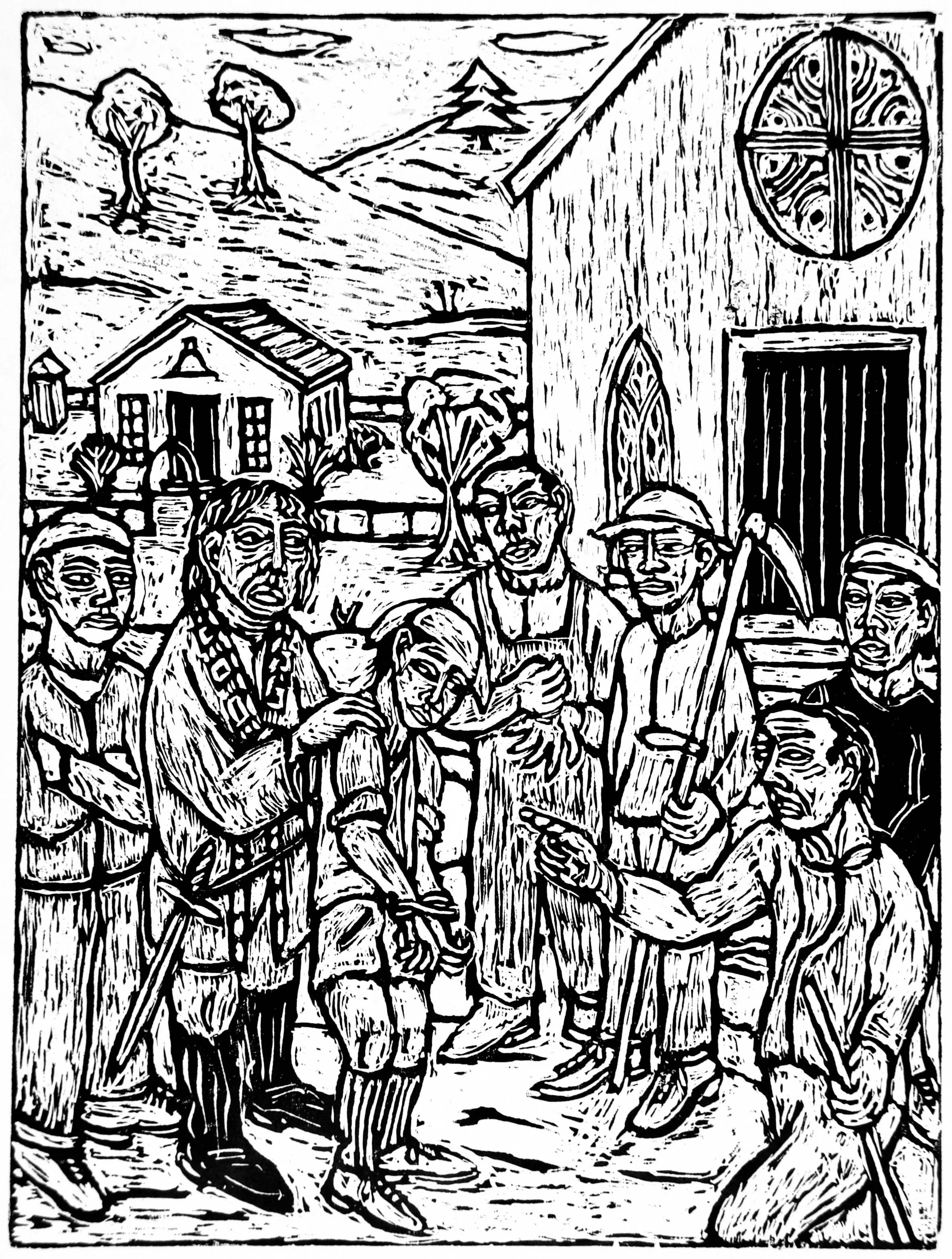
His father was adamant that his son must be punished, and left the decision of how to the village. “I have failed us all, so you must decide his fate. But let us wait until tomorrow, when every one is back off the mountain.”
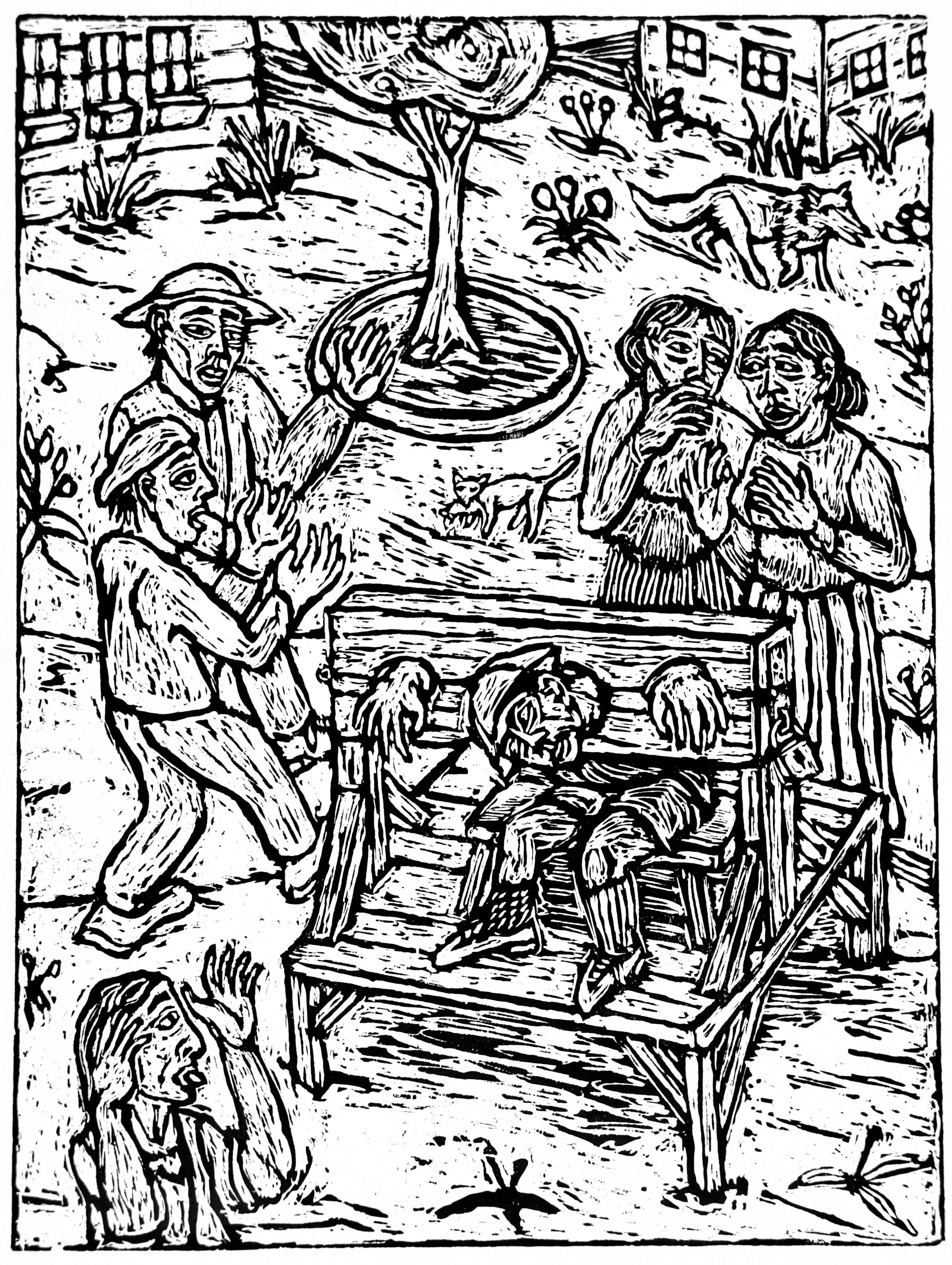
Some wanted to stone the Boy, that he suffer the same fate as his flock. But other warned against more violence, saying it would only hide the original crime. In the end it was decided that the Boy would be placed in the stocks, so that all could be reminded of the tragedy and the Boy could be forced to confront the pain he had caused.
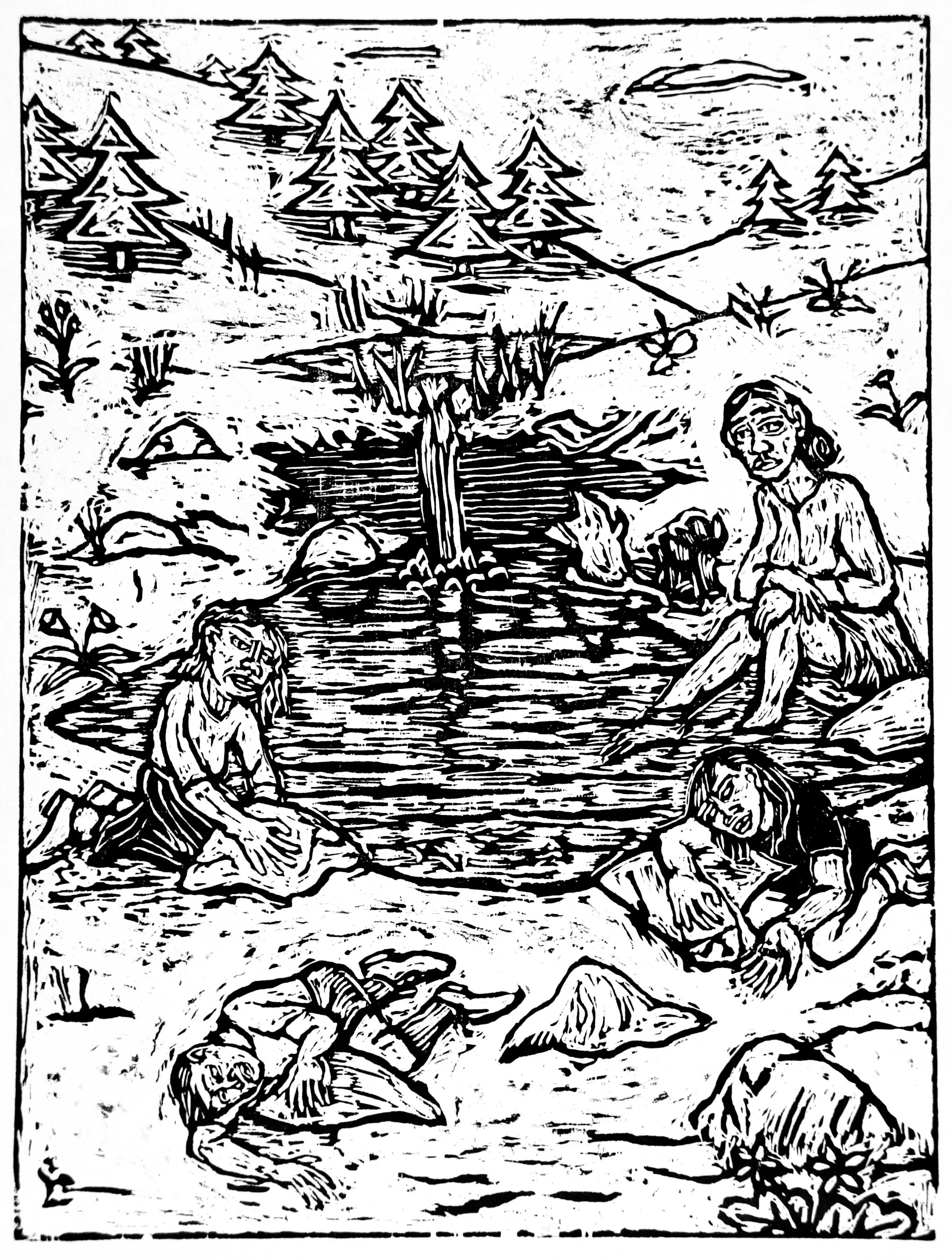
There is a small pool behind the church, a place the village children had always played. Over time large stones began to appear in the grasses around it. Stones that all bore an uncanny resemblance to sheep. And so a memorial came to be, cared for by the children, who have tended them faithfully for generations.